
DRYER VENT INSPECTION
Assessment of the vent line, its route, its material and its exterior termination.
- Residential & Commercial
- Maryland and surrounding areas
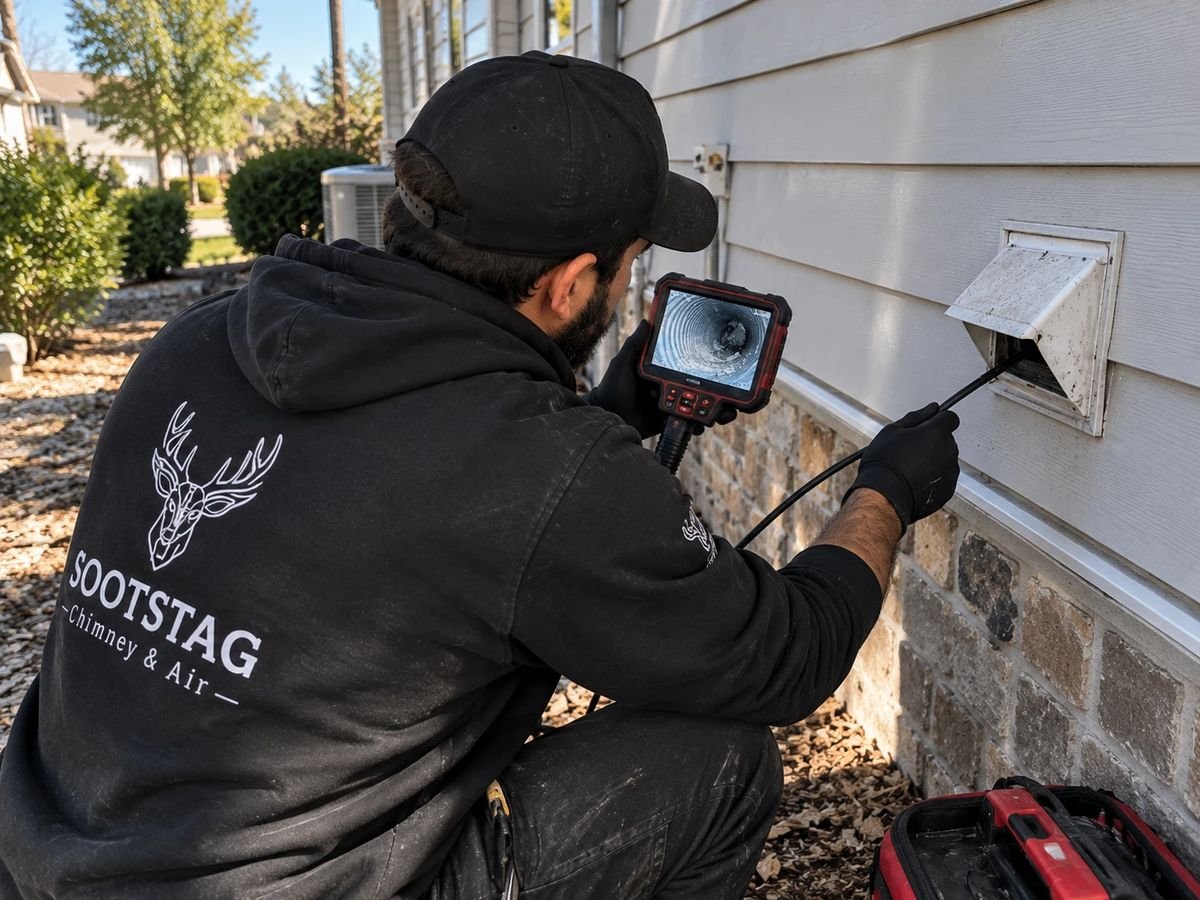
- Route, material and exterior termination
- The line as installed, not as assumed
- Findings reported against what was seen
WHAT DRYER VENT INSPECTION COVERS
A dryer vent inspection describes the line as it was actually installed: where it runs, how far, how many times it changes direction, what it is made of, how the sections are joined, and how it terminates outside.
A sudden change in performance is the symptom this service suits best — it is more consistent with an obstruction or a disconnection than with gradual accumulation, and those are different problems with different answers. Where the route is known and intact and the change came on slowly, cleaning is likely the service you want. Where discharge has stopped and there is activity at the outside vent, nest removal is the more likely one.
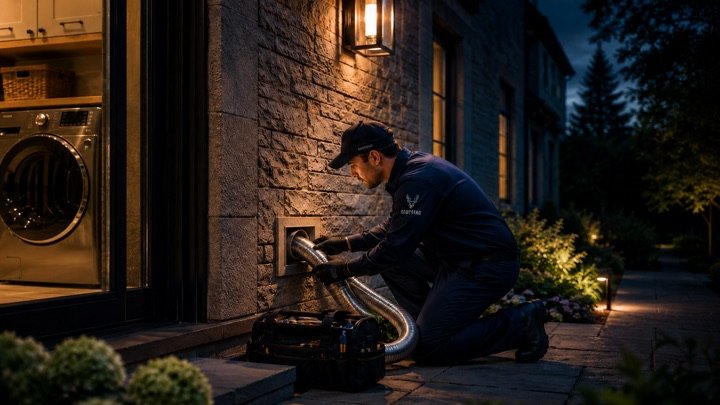
WHAT ARE YOU NOTICING?
Three of the observations that most often lead here, and what each one usually means.
You do not know the route
A vent line is largely concealed, and its length and bends decide how it behaves.
Performance changed suddenly
A sudden change is more consistent with an obstruction or a disconnection than with gradual build-up.
The property is new to you
How the line was installed is not something the laundry room shows.
WHICH ONE DO YOU NEED?
These services overlap. Here is how to tell which one answers your situation.
An inspection is the fit
- The route, length or material is unknown
- You suspect damage, disconnection or an obstruction
- You want the line described before any work
A clean is what you want
- The route is known and intact
- The change came on slowly rather than all at once
- The interval since the last clearing explains it
WHAT THE SERVICE INCLUDES.
Every item below is part of the service. What a specific job needs is identified against the property itself.
- Vent line route traced from connection to termination
- Duct material and joints assessed along the run
- Internal camera survey where access allows
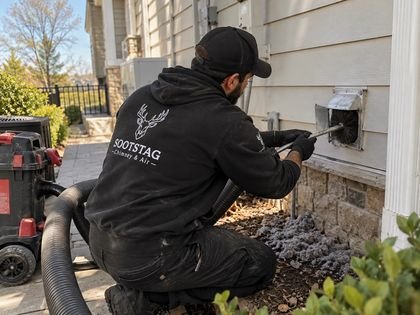
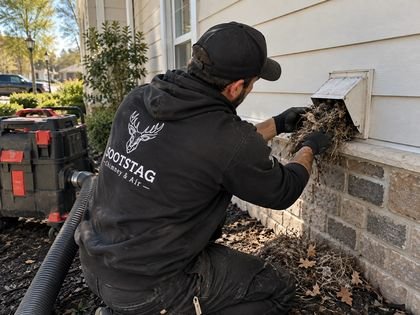
- Exterior termination and damper assessed
- Accumulation and obstruction noted along the run
Covered within this service
- Dryer Vent Camera Inspection
HOW THE WORK RUNS.
The sequence the work follows. What a particular visit needs is set by the system in front of us.
- 01 The connection behind the dryer is examined The transition piece is the start of the line and shows how the rest has been running.
- 02 The route is traced Where the line goes, how far it travels and where it changes direction.
- 03 Material and joints are identified Rigid, semi-rigid or flexible, and how the sections are joined along the way.
- 04 The termination is assessed The exterior end and its flap are examined as part of the line.
- 05 Findings are set out Route, length, material, condition and anything that would change how the line is cleared.
WHEN AN INSPECTION SAVES A WASTED CLEANING
Clearing a line answers a question you may not have. Where the line is intact and simply loaded, that is exactly the right service. Where it is disconnected, crushed, or terminating somewhere it should not, clearing it changes very little.
The symptoms are close enough to be worth separating first. Longer drying times, a machine running warm, weak discharge outside — all of them are consistent with a loaded line, and all of them are equally consistent with a line that has come apart somewhere along its run.
That is what makes the sudden-versus-gradual distinction so useful when you make the request. Gradual change fits accumulation and points at cleaning. Sudden change fits something having happened to the line, and points here first.
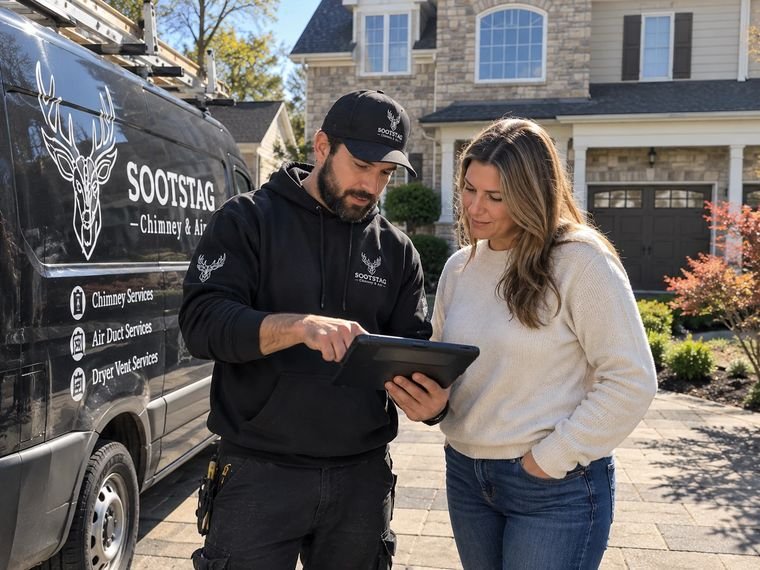
WHAT YOU ARE LEFT WITH.
The route is established
Where the line runs, how far, and how many changes of direction it makes.
Material is identified
What the line is made of affects how it holds lint and how it can be cleared.
The termination is assessed
The exterior end is examined as part of the line rather than as a separate fitting.
Work becomes specifiable
Clearing or removal can be scoped against a line that has been described.
Not sure how the line runs?
Describe what you know and you will get a scope for assessing it.
WHAT SETS THE SCOPE.
These are the details that change what this job involves. Include what you know when you send a request — it makes the answer more useful.
How much of the run is concealed
A line inside the structure can only be assessed where it can be reached or entered.
Termination access
A roof or high wall termination changes what can be examined from outside.
Line material
Flexible duct behaves differently from rigid metal, and is assessed differently.
Joints along the run
Where sections meet is where a line most often separates or restricts.
WHAT THE INSPECTION IS ACTUALLY LOOKING FOR
A vent line is largely concealed, and its behaviour is decided almost entirely by properties you cannot see: how far it travels, how many times it turns, what it is made of, and whether it still discharges outside.
A separated joint is the finding that most changes the picture. It presents like a restriction from the laundry room — poor performance, long cycles — but it is not solved by clearing, and running the machine meanwhile discharges warm, moist, lint-laden air into the structure.
The assessment starts at the connection behind the machine, because that piece shows how the rest of the line has been running, and follows the route from there.
- ROUTE
- Length and bends, which set how fast a line restricts.
- MATERIAL
- Rigid, semi-rigid or flexible, each cleared differently.
- TERMINATION
- Whether the flap still opens as it should.
WHAT TO HAVE READY.
Say what changed and when
Sudden and gradual changes point at different causes.
Point to the exterior vent if you can
Knowing where the line exits narrows the route considerably.
Clear access behind the dryer
The connection at the machine is where the assessment starts.
WORTH UNDERSTANDING FIRST.
Shared Dryer Vents in Apartments and Condos: What to Ask Before Booking In a multi-unit building the duct behind your machine is often not only yours, and that changes what can be cleaned and who decides.
Rigid, Semi-Rigid or Foil: What Your Dryer Duct Is Made Of Matters The concertina foil hose behind the machine is the cheapest part of the installation and the one most likely to be causing the problem.
RELATED SERVICES.
The rest of the dryer vent family, each with its own scope.
Quick answer
What does a dryer vent inspection tell me?
How the line is routed, what it is made of, how much has accumulated in it, and how it terminates outside — surveyed internally with a camera where access allows. It is the service that answers why a run loads faster than its length suggests, which is usually the geometry rather than the amount of use.
DRYER VENT INSPECTION — COMMON QUESTIONS.
If your question isn't here, send it with an estimate request and we'll answer it directly.
The line as installed: where it runs, how far, how many times it changes direction, what it is made of, how sections are joined, and how it terminates outside.
Because length and bends decide how quickly a line restricts. Every change of direction is a collection point, so a long run with several turns behaves quite differently from a short straight one.
A sudden change fits an obstruction or a disconnection rather than gradual accumulation, which builds slowly. That distinction changes what is looked at first.
A section that has come apart, discharging warm, moist, lint-laden air into a wall cavity or floor void rather than outside. It presents like a restriction but clearing does not fix it.
It describes the condition, material, route and joints, which is what that decision rests on. What it does not do is turn that into a recommendation the findings do not support.
Only if the route is unknown or you suspect damage. Where the line is known, intact, and simply overdue, cleaning is the service you want.
Not always. Concealed sections can only be assessed where they can be reached or entered, and what could not be examined is stated rather than assumed.
Space behind the dryer, since the connection at the machine is where the assessment starts, and sight of the exterior termination where that is reachable.
TELL US WHAT YOU NEED.
WE'LL COME BACK WITH A SCOPE.
Send the property type and the service you're after. You'll get a clear scope and a price — no obligation to book.
- Family-Owned
- 12+ Years of Experience
- Certified & Insured
- Residential & commercial
- Maryland and surrounding areas