
CHIMNEY ODOR REMOVAL
Treatment of odors originating in the chimney, starting with the source rather than the symptom.
- Residential & Commercial
- Maryland and surrounding areas
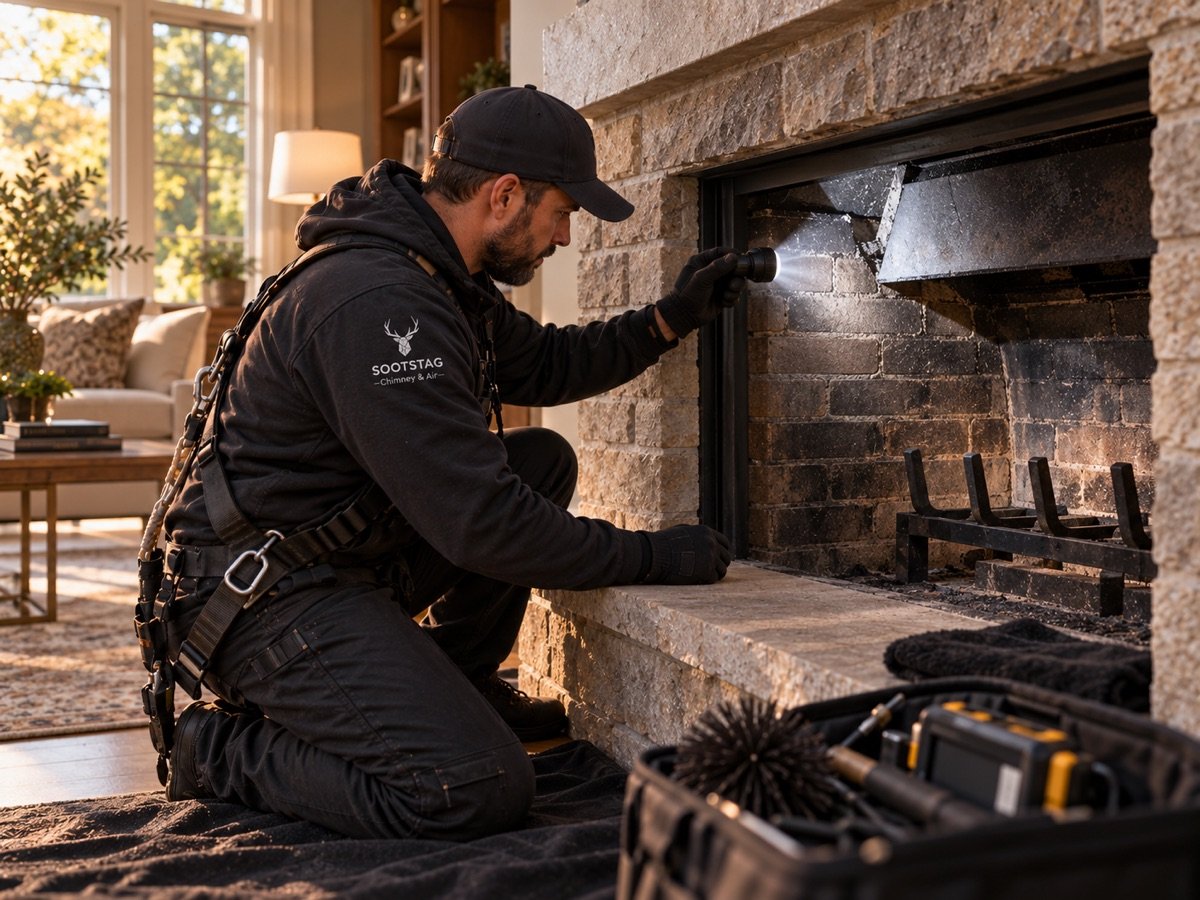
- Source identified before treatment
- Deposits, moisture and draw all considered
- Treatment follows the cause
WHAT CHIMNEY ODOR REMOVAL COVERS
Chimney odour work starts with the source rather than the smell. Deposits in the run, moisture reaching those deposits, and the direction air moves in the flue when the appliance is idle each produce odour, and each calls for different work. Treating the symptom without establishing which one applies is why chimney smells so often come back.
Where deposits are the source, clearing them is the work, and it overlaps with a sweep. Where moisture is entering, the cause sits at the crown or the termination and is a question for an inspection rather than for cleaning. Where air movement is the mechanism, neither cleaning nor sealing addresses it on its own.
WHAT ARE YOU NOTICING?
Three of the observations that most often lead here, and what each one usually means.
It is worse in warm weather
Odour that strengthens when the appliance is not in use often follows a change in how air moves in the flue.
It came on after rain
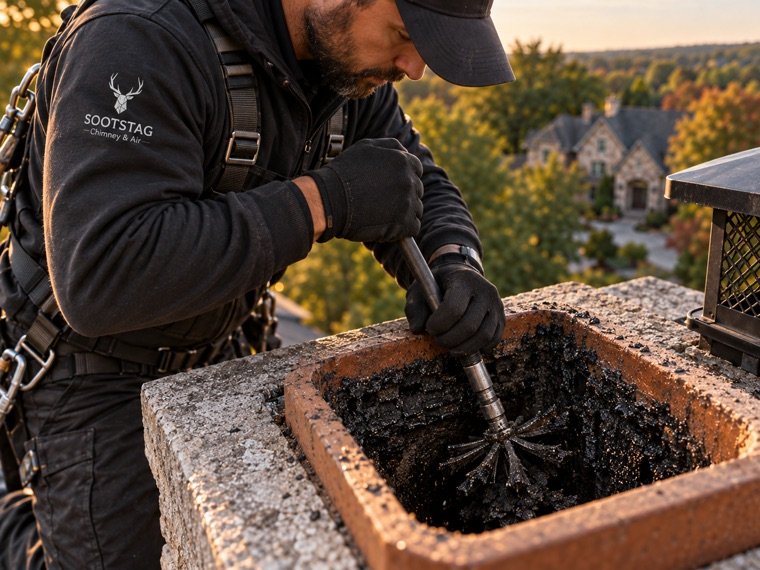
Moisture reaching deposits in the run is a common trigger, and points at the termination or the liner.
The smell is constant
A steady odour usually has a source in the run itself rather than in the weather.
WHICH ONE DO YOU NEED?
These services overlap. Here is how to tell which one answers your situation.
Odour work is the fit
- The smell is the problem you want solved
- The system is otherwise behaving normally
- You want the source found rather than covered
Start with an inspection
- There is staining or damp alongside the smell
- Draw has changed as well
- You suspect something is in the flue
WHAT THE SERVICE INCLUDES.
Every item below is part of the service. What a specific job needs is identified against the property itself.
- Source of the odor located within the chimney
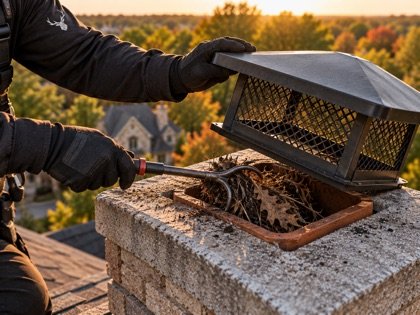
- Deposit and residue removed where that is the source
- Nesting or organic material removed where present
- Moisture ingress points at crown and termination noted
- Draft direction through the flue assessed
HOW THE WORK RUNS.
The sequence the work follows. What a particular visit needs is set by the system in front of us.
- 01 When the smell occurs is established Warm weather, after rain, or constantly — each points at a different mechanism.
- 02 The flue is examined for its source Deposits, moisture ingress and material in the run are looked for before anything is applied.
- 03 Air movement is considered Odour that appears when the appliance is idle often follows the direction air is moving in the flue.
- 04 The cause is addressed Deposits are cleared, or the finding is reported where the cause sits outside this service.
- 05 What was found is set out Including the cases where the source is not in the chimney at all.
WHEN THE SOURCE IS NOT THE CHIMNEY
A chimney is a convenient thing to blame for a smell in a room, and part of the value of looking properly is ruling it out.
A flue that is clear, dry and drawing correctly is not producing an odour, and where that is what is found it is reported as such rather than converted into work. The smell is real; its source is elsewhere, and knowing that is worth more than a cleaned flue that changes nothing.
Where the chimney is involved but not in the way expected — moisture entering at the crown, for instance, rather than deposits in the run — the finding points at an inspection of the structure rather than at more cleaning. The distinction matters because one of those addresses the cause and the other does not.
WHAT YOU ARE LEFT WITH.
The source is looked for first
Deposits, moisture ingress and air movement produce different smells and need different work.
Treatment follows the finding
What is done depends on what is causing it, rather than a single approach applied to every case.
Masking is not the method
A fragrance in the flue does not change what is producing the odour.
You are told what was found
If the cause sits outside this service, that is what the report says.
A smell you want traced, not covered?
Tell us when it happens and you will get a scope for finding the source.
WHAT SETS THE SCOPE.
These are the details that change what this job involves. Include what you know when you send a request — it makes the answer more useful.
Season and weather
Warm, humid conditions and rain each affect odour differently, and that points at the cause.
Deposit level in the run
Deposits hold odour, and how much is present affects what clearing will change.
Air movement in the flue
Whether air is moving up or down the chimney when idle decides whether odour reaches the room.
Moisture ingress
A termination or liner letting water in changes the picture, and is reported rather than treated over.
WHY CHIMNEY SMELLS COME BACK
A chimney odour that returns has almost always been treated at the wrong end. The smell is the last link in a chain — deposits, moisture and airflow are the earlier ones — and a fragrance placed in the flue changes none of them.
Airflow is the most commonly missed. A flue is a vertical shaft connecting a room to the outside, and when the appliance is idle the direction air moves through it depends on temperature, pressure and how tightly the rest of the building is sealed.
So the work begins with when the smell occurs rather than what it smells of. The pattern over a week says more about the mechanism than the odour does.
- WARM, HUMID DAYS
- Usually air moving down the flue, not up it.
- AFTER RAIN
- Moisture at the termination or through the liner.
- CONSTANT
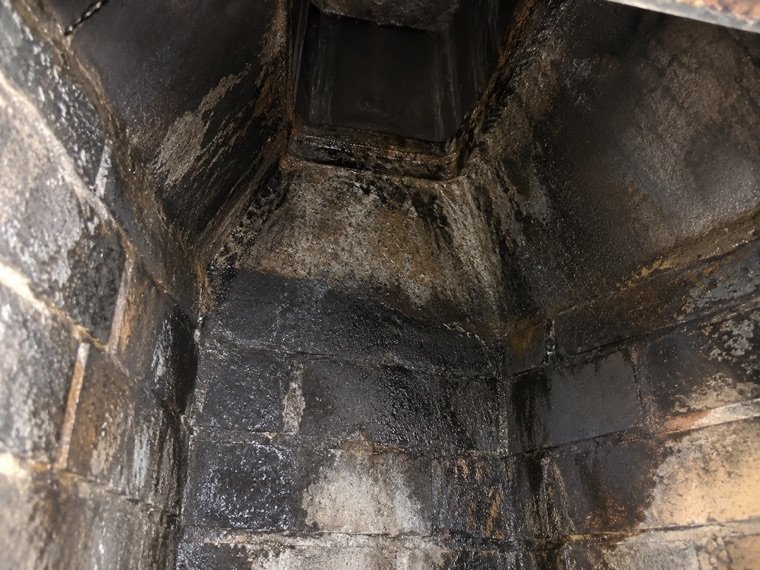
- The deposits sitting in the run itself.
WHAT TO HAVE READY.
Note when it is worst
Time of year, weather and whether the appliance is in use are the most useful details.
Describe the smell
Sooty, damp, or something else — the description narrows the likely source.
Mention any recent work
A new appliance, a capped flue or a sealed room all change how air moves.
WORTH UNDERSTANDING FIRST.
Why Your Fireplace Smells When It Is Not Lit A chimney smell in warm, humid weather is not the chimney being old. It is the chimney telling you what is inside it and which way the air is moving.
Water in a Chimney: Where It Gets In and What It Does A chimney is the one part of a roof that is deliberately open at the top. Most chimney damp is a question of which of four routes the water is using.
RELATED SERVICES.
The rest of the chimney family, each with its own scope.
Quick answer
Can a chimney smell actually be fixed?
Yes, once the source is found. The work starts by locating it — deposit reacting with humidity, moisture getting in, nesting material, or air coming down the flue instead of going up — because each of those is addressed differently. Treating the smell without the source works for as long as the product lasts.
CHIMNEY ODOR REMOVAL — COMMON QUESTIONS.
If your question isn't here, send it with an estimate request and we'll answer it directly.
Usually one of three things: deposits in the run, moisture reaching those deposits, or air moving down the flue rather than up it when the appliance is idle. Each needs different work, which is why the source is established first.
Because warm, humid air and an idle appliance make downward airflow more likely, carrying odour from the run into the room. The deposits have not changed; the direction the air moves has.
Sometimes, when deposits are the source. It is not reliable on its own, because moisture entering the run and the direction of airflow can both produce odour in a flue that has been cleared.
Not durably. A fragrance in the flue covers the odour for as long as it lasts and leaves whatever is producing it in place.
When the smell occurs — time of year, weather, and whether the appliance is in use. The pattern over a week says more about the mechanism than the smell itself does.
Yes. Replacement windows or sealing draughts changes the pressure balance of a house, and a chimney can begin to smell without anything in the chimney having changed at all.
That is reported. A flue that is clear, dry and drawing correctly is not producing an odour, and ruling it out is a legitimate and useful outcome rather than a reason to find work.
Moisture is looked for as a source, but where water is entering at the crown or termination the cause is structural. That is described and pointed at an inspection rather than treated over.
TELL US WHAT YOU NEED.
WE'LL COME BACK WITH A SCOPE.
Send the property type and the service you're after. You'll get a clear scope and a price — no obligation to book.
- Family-Owned
- 12+ Years of Experience
- Certified & Insured
- Residential & commercial
- Maryland and surrounding areas