
CHIMNEY SWEEP
Mechanical removal of soot, creosote and debris from the flue, smoke chamber and firebox.
- Residential & Commercial
- Maryland and surrounding areas
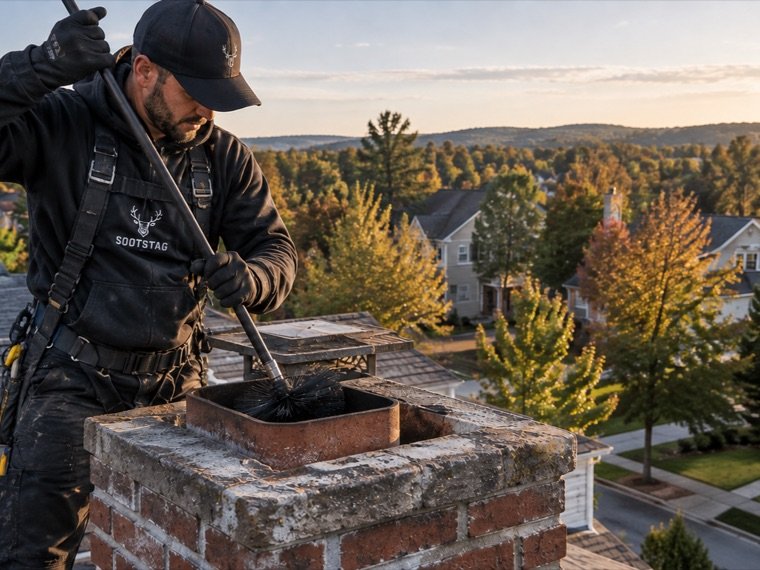
- Open fireplaces, inserts and wood-burning stoves
- Flue liner, smoke chamber and firebox
- Collected material taken away
WHAT CHIMNEY SWEEP COVERS
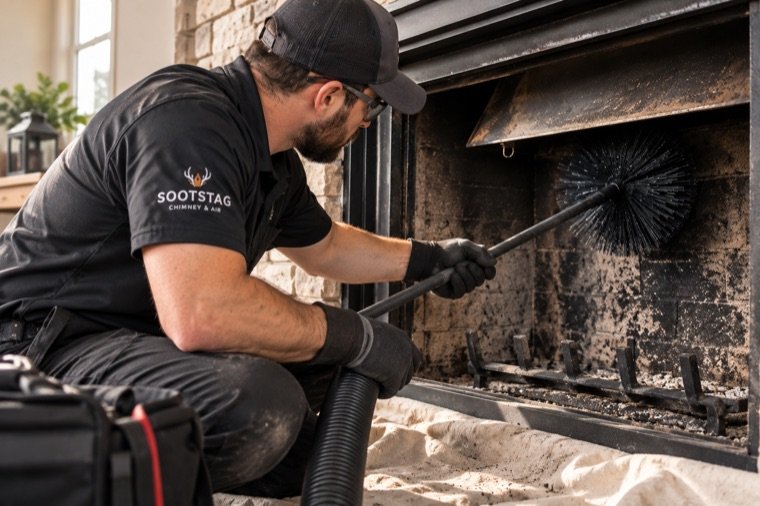
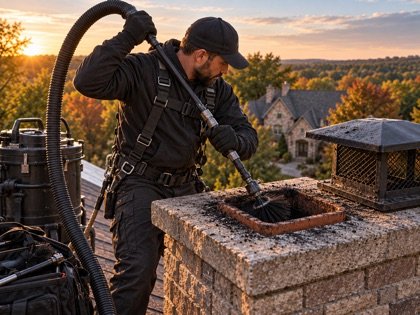
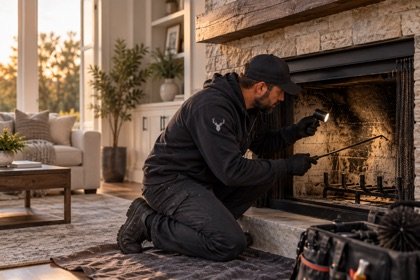
A chimney sweep is the mechanical removal of soot, creosote and loose debris from the flue liner, the smoke chamber and the firebox. It covers open fireplaces, inserts and wood-burning stoves, along with the flues serving connected appliances. The work is the run itself — the passage combustion gases travel through — rather than the fireplace you look at from the room.
A sweep addresses deposits. It does not, on its own, tell you the condition of the structure carrying them — although a swept flue is the only state in which a liner can actually be seen, so anything visible once it is clear gets described. Where condition is the question rather than accumulation, a chimney inspection is the service that answers it, and it is the better first step if the system is unfamiliar or something about it has changed.
Also referred to as Chimney Flue Cleaning.
WHAT ARE YOU NOTICING?
Three of the observations that most often lead here, and what each one usually means.
Debris in the firebox
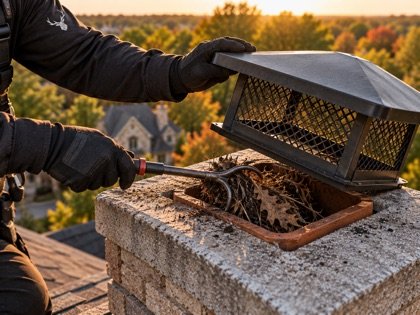
Loose material collecting below the damper generally came from the flue above it.
It has been a while
Deposits build gradually. How quickly depends on how much the appliance is used and what is burned in it.
You want it looked at first
A sweep clears deposits. An inspection reports on condition. If you are unsure which you need, the inspection comes first.
WHICH ONE DO YOU NEED?
These services overlap. Here is how to tell which one answers your situation.
A sweep is the fit
- The appliance is in regular use and works as expected
- You want accumulated deposits cleared
- Nothing about the structure itself is in question
Start with an inspection
- Smoke has entered the room during use
- There is staining or damp on the stack or the wall beside it
- The system is new to you, or has stood unused for a long period
WHAT THE SERVICE INCLUDES.
Every item below is part of the service. What a specific job needs is identified against the property itself.
- Flue liner brushed along its accessible length
- Smoke chamber and smoke shelf cleared
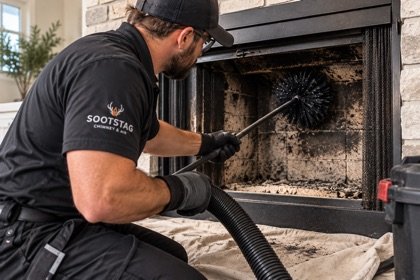
- Firebox swept out and loose material removed
- Damper area cleared of loose deposits
- Debris collected and taken away
HOW THE WORK RUNS.
The sequence the work follows. What a particular visit needs is set by the system in front of us.
- 01 Access is established From the firebox, from the roof, or both, depending on the appliance and the run above it.
- 02 The opening is sealed and the area covered The firebox opening is closed off so displaced material stays in the flue rather than entering the room.
- 03 The flue is brushed along its accessible length Brush size and type are matched to the liner material and the flue dimensions.
- 04 The smoke chamber, shelf and firebox are cleared Material dislodged from the run collects here, along with what was already sitting on the shelf.
- 05 Debris is collected and removed What came out of the system leaves with the crew, and the swept liner can then be looked at.
WHAT THE SWEPT FLUE THEN SHOWS
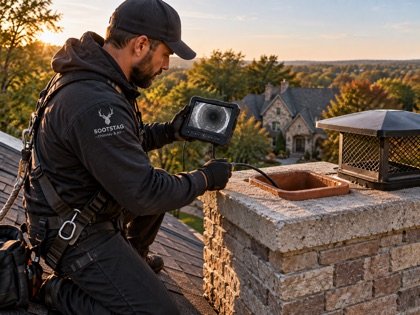
Clearing the run has a second effect worth knowing about before the visit: it makes the liner visible. Under a loaded flue the surface cannot be assessed at all, so a sweep is often the point at which the condition of the chimney becomes an answerable question for the first time.
What that reveals varies. Frequently nothing of note — a sound liner, and the job is finished. Sometimes it is a section of glazing that brushing has exposed rather than removed, which points at creosote removal. Occasionally it is something structural, in which case what was seen and where is described, and the next step is a full inspection rather than more cleaning.
None of that changes the sweep you booked. It is reported, not acted on unilaterally: the decision about what follows is yours, and it is easier to make against a description of the flue than against a guess.
WHAT YOU ARE LEFT WITH.
The flue runs at its full cross-section
Deposits narrow the passage the appliance was sized for. Sweeping returns the accessible length to its own dimensions.
The damper moves on its seat
Loose material settles on the smoke shelf and around the damper plate, which is where stiffness usually starts.
The liner surface becomes visible
A swept flue is the only state in which the liner can actually be seen and assessed.
Nothing is left on the property
Collected soot and debris are contained and taken away rather than bagged and left.
Ready to have the flue cleared?
Send the property type and the appliance, and you will get a scope for the sweep.
WHAT SETS THE SCOPE.
These are the details that change what this job involves. Include what you know when you send a request — it makes the answer more useful.
Flue height and offsets
A tall run with bends takes longer to brush and may need access from both ends.
Appliance type
An open fireplace, an insert and a stove each present a different route into the flue.
Liner material and condition
Clay, metal and cast liners take brushing differently, and condition decides what is safe to use.
Deposit volume and hardness
Loose soot brushes out. Hardened deposits are a different service.
WHAT ACTUALLY BUILDS UP INSIDE A CHIMNEY
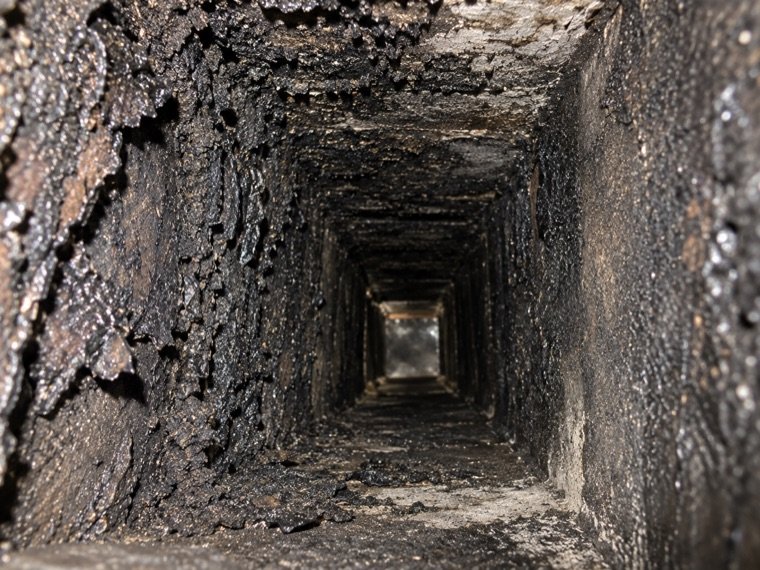
What collects in a flue is not one substance, and the difference is what sets the scope. Soot brushes away readily. Creosote condenses out of cooling combustion gases and hardens in stages — the early flaky stage comes out during a routine sweep, the tarry and glazed stages do not, which is why creosote removal is a separate service.
How much of each you have depends on how the appliance is run: hot fires on seasoned fuel leave comparatively little, long damped-down burns on unseasoned wood leave far more. EPA Burn Wise guidance(opens in a new tab) sets out the same relationship.
If the concern is the firebox and the surround rather than the passage above them, fireplace cleaning is the service for that.
- SOOT
- Loose, powdery residue.
- CREOSOTE
- Sticky, hardened or glazed combustible buildup.
- ASH & DEBRIS
- Often settles around the smoke shelf and damper.
WHAT TO HAVE READY.
Let the appliance go cold
A flue that has been used within roughly 24 hours cannot be worked on.
Say what the appliance is
Open fireplace, insert or stove — it changes the access route and the brush selection.
Mention anything unusual
Smoke entering the room, an odour, or material arriving in the firebox all change what is worth checking.
WORTH UNDERSTANDING FIRST.
How Often Should a Chimney Be Swept? The honest answer is that sweeping runs on deposits, not on the calendar — but the inspection that tells you which you need does run annually.
Creosote: Why the Type Matters More Than the Amount A quarter-inch of flaky soot and a quarter-inch of hardened glaze are the same measurement and completely different problems.
Smoke Coming Into the Room: Why a Fireplace Draws Badly A chimney pulls because warm air rises and the house replaces what leaves. Smoke in the room means one of those two halves is not happening.
RELATED SERVICES.
The rest of the chimney family, each with its own scope.
Quick answer
What does a chimney sweep actually remove?
Soot, creosote and loose debris, taken off the flue liner, the smoke chamber and the firebox and collected rather than pushed further into the run. It covers open fireplaces, inserts, wood-burning stoves and the flues serving connected appliances. What it is not is an assessment of the structure carrying the deposit — a swept flue is simply the only state in which that can properly be seen, which is why the two often belong in one visit.
CHIMNEY SWEEP — COMMON QUESTIONS.
If your question isn't here, send it with an estimate request and we'll answer it directly.
The flue liner along its accessible length, the smoke chamber and smoke shelf, the firebox and the damper area. Loose material is collected and taken away rather than left on site.
A sweep is the flue above the firebox; a fireplace cleaning is the assembly you look at. If debris is arriving from above or the draw has changed, the sweep addresses the cause. If the firebox and surround simply look tired, the cleaning is the service.
Yes. Scope covers open fireplaces, inserts and wood-burning stoves, along with the flues serving connected appliances. The appliance type changes the access route and the brush selection, so it is worth saying which you have.
It depends on use and fuel rather than the calendar. Regular winter burning on seasoned wood accumulates differently from occasional use, and long, cool, damped-down fires build deposits considerably faster than hot ones.
The firebox opening is sealed before brushing begins, so displaced material stays in the flue rather than entering the room, and the hearth area is covered. What comes out of the system leaves with the crew.
Either, and sometimes both. The route follows the appliance and the run above it — a tall flue with offsets may need access from both ends, while a straightforward open fireplace is usually worked from the firebox.
Nothing about the sweep itself prevents use; a cleared flue is in the condition it was designed to run in. If anything was seen in the liner while it was visible, that is described so you can decide what follows.
That points at hardened or glazed creosote, which does not respond to brushing. It is a different service with a different method, and it is identified on site rather than worked at until something gives.
TELL US WHAT YOU NEED.
WE'LL COME BACK WITH A SCOPE.
Send the property type and the service you're after. You'll get a clear scope and a price — no obligation to book.
- Family-Owned
- 12+ Years of Experience
- Certified & Insured
- Residential & commercial
- Maryland and surrounding areas