
DRYER VENT CLEANING
Clearing lint and debris along the full vent line, from the dryer connection to the exterior termination.
- Residential & Commercial
- Maryland and surrounding areas
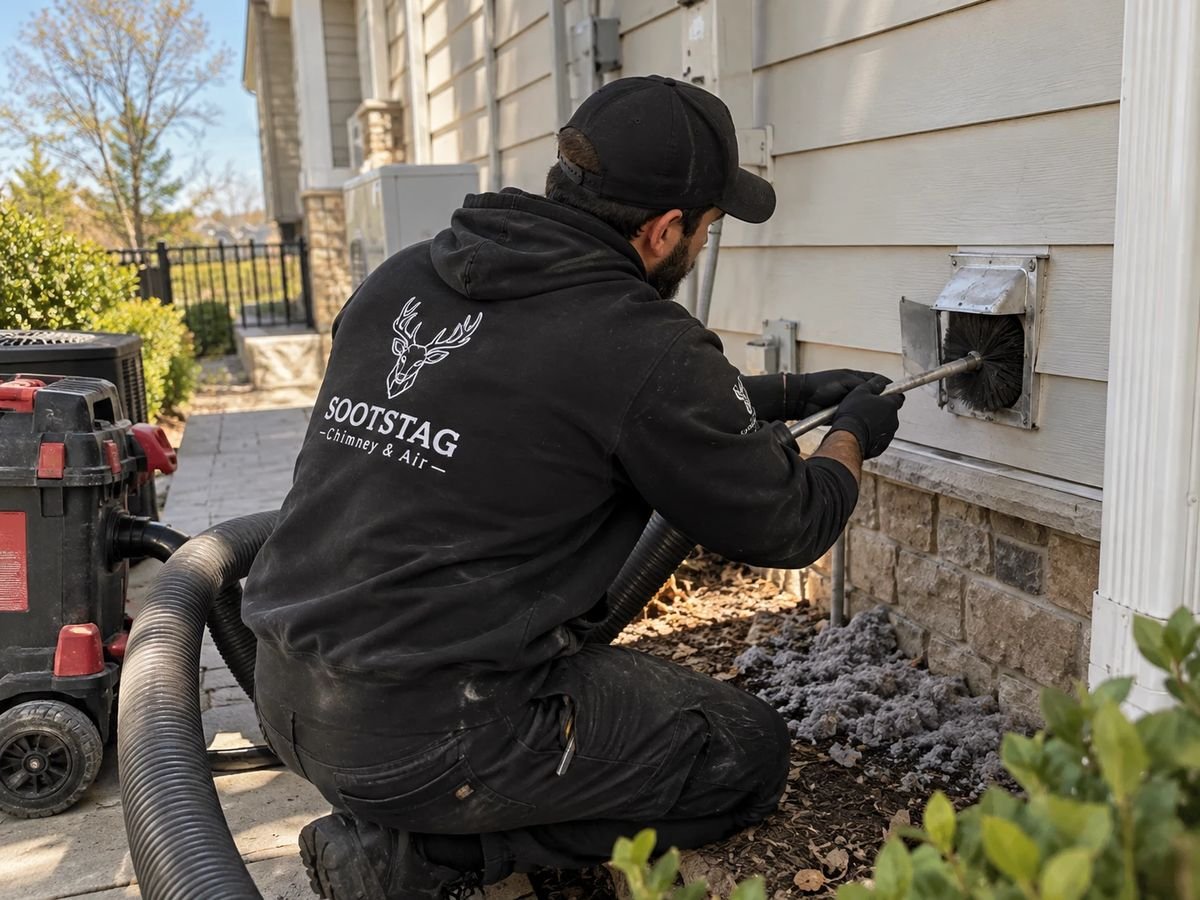
- Full line, connection to exterior termination
- Lint and debris across the run
- Termination checked once clear
WHAT DRYER VENT CLEANING COVERS
Dryer vent cleaning clears lint and debris along the whole vent line, from the connection behind the machine to the exterior termination. The accessible first stretch is the easiest part to reach and rarely the part where a restriction actually sits, so the work covers the run rather than the end of it.
Lint accumulation in a vent line is a recognised maintenance concern; U.S. Fire Administration guidance on clothes dryers(opens in a new tab) covers keeping the line and its outside opening clear. Where you do not know the route, or performance dropped suddenly rather than gradually, an inspection establishes the line first. Where discharge stopped altogether and there is activity at the outside vent, nest removal is the more likely service. The family is on the dryer vent services page.
Also referred to as Clogged Dryer Vent Cleaning.

WHAT ARE YOU NOTICING?
Three of the observations that most often lead here, and what each one usually means.
Drying takes longer
Loads needing a second cycle is the observation that most often brings people to the vent line.
The dryer runs hot
A machine and a load that are unusually warm at the end of a cycle point at the line rather than the appliance.
The outside vent barely moves
Weak or no discharge at the termination while the dryer runs indicates a restriction somewhere in the run.
WHICH ONE DO YOU NEED?
These services overlap. Here is how to tell which one answers your situation.
A clean is the fit
- The line has not been cleared in a long interval
- Performance has changed gradually
- You know the route and it is intact
Start with an inspection
- You do not know where the line runs
- The change was sudden rather than gradual
- You suspect the line is damaged, disconnected or obstructed at the termination
WHAT THE SERVICE INCLUDES.
Every item below is part of the service. What a specific job needs is identified against the property itself.
- Dryer connection and transition duct cleared
- Vent line cleared along its run
- Exterior termination and damper cleared
- In-line booster fan cleaned where one is fitted
- Removed lint collected and taken away
Covered within this service
- Dryer Vent Booster Fan Cleaning
- Rooftop Dryer Vent Cleaning
- Multi-Unit Dryer Vent Cleaning
HOW THE WORK RUNS.
The sequence the work follows. What a particular visit needs is set by the system in front of us.
- 01 The dryer is pulled out and disconnected The transition piece behind the machine is the first part of the line and is often where lint sits.
- 02 The route is established Where the line runs, how far and how many bends it makes decides how it is cleared.
- 03 The line is cleared along its length Worked from the connection toward the termination, with material captured rather than pushed ahead.
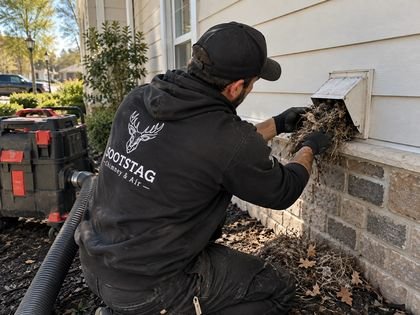
- 04 The termination is cleared and checked The exterior end, including the flap, is where restriction commonly sits.
- 05 The dryer is reconnected and discharge confirmed The machine is put back and the line is checked to be discharging at the outside end.
WHY THE OUTSIDE END DECIDES SO MUCH
Of all the points along a vent line, the exterior termination is the one most often left out of a cleaning — and the one most likely to be causing the symptom.
It is the only part of the run with a moving component. The flap has to open against discharge and close against weather, and it sits outdoors. Lint at the hinge, a flap painted over at some point, or one that has been damaged all restrict the run at its narrowest point, and none of it is visible from the laundry room.
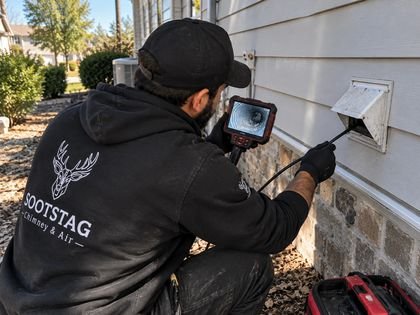
This is why the termination is cleared and then checked once the rest of the line is clear, and why discharge is confirmed at the outside end before the job is called finished. A line cleared to within a foot of its opening is not a cleared line.
WHAT YOU ARE LEFT WITH.
The full line is cleared
From the dryer connection to the exterior termination, not the accessible first stretch.
The termination is included
The outside end is where restriction commonly sits, and it is checked once the run is clear.
The route is confirmed as it is cleared
Length, bends and material become known during the work rather than assumed.
Lint leaves the property
Material removed from the line is collected rather than discharged into the room.
Loads taking two cycles?
Tell us roughly where the line runs and you will get a scope for clearing it.
WHAT SETS THE SCOPE.
These are the details that change what this job involves. Include what you know when you send a request — it makes the answer more useful.
Route length
A short run to an outside wall and a long run through the structure are different jobs.
Number of bends
Every change of direction is a point where lint collects and where clearing is harder.
Line material
Rigid metal, semi-rigid and flexible duct hold lint differently and tolerate different methods.
Termination type and height
A ground-floor wall vent and a roof termination need different access.
WHERE LINT COLLECTS ALONG THE ROUTE
Lint does not distribute evenly along a vent line. It collects where the airflow slows or changes direction, so the route itself decides where the restriction forms. Two houses with the same dryer can need clearing at very different intervals.
The termination is usually the worst of them: the run meets a flap that has to open against the airflow, and lint building there reduces how far it opens, which slows the air, which deposits more lint.
Material is drawn back toward the connection rather than pushed ahead of the tool; pushing lint toward a restriction only compacts it.
- BENDS
- Lint builds on the outside of every change of direction.
- RIBBED DUCT
- Semi-rigid and flexible line catches at every ridge.
- THE TRANSITION
- The short piece behind the machine, often the worst of it.
WHAT TO HAVE READY.
Know where the vent exits
Wall, roof or soffit — the exterior end decides how the termination is reached.
Estimate the run
Roughly how far the line travels, and whether it turns, is the most useful detail for scoping.
Clear access behind the dryer
The machine has to come out, so the space behind it needs to be reachable.
WORTH UNDERSTANDING FIRST.
Dryer Vent Warning Signs Worth Acting On Clothes taking longer to dry is the earliest and most reliable signal that a dryer vent is restricted. Most of the others are variations on it.
How Long a Dryer Vent Run Should Be, and Why Bends Count Against It Length is only half of it. Every bend in a dryer duct costs the run more than the straight footage it replaces, which is why two 20-foot runs can behave nothing alike.
Why a Blocked Dryer Vent Becomes a Fire Risk Lint is fuel and a dryer is a heat source. What decides whether that matters is whether the exhaust is leaving the building freely.
What You Can Clear Yourself, and What Needs Reaching The honest dividing line is not skill. It is how much of the run you can physically get to, and what happens to the lint you dislodge.
RELATED SERVICES.
The rest of the dryer vent family, each with its own scope.
Quick answer
What does a dryer vent cleaning cover?
The whole line: the connection behind the dryer, the run inside the building, and the termination outside — cleared from both ends where the layout allows, because the far end is where the restriction most often is. Airflow is checked at the outlet before and after. It covers residential, commercial and multi-unit properties, including shared runs.
DRYER VENT CLEANING — COMMON QUESTIONS.
If your question isn't here, send it with an estimate request and we'll answer it directly.
The whole vent line, from the connection behind the machine to the exterior termination, including the flap at the outside end.
No. That is the easiest stretch to reach and rarely where a restriction sits. The line is cleared along its length, and the termination is cleared and checked as part of the work.
It depends on the line and the load. A long run with several bends collects lint far faster than a short straight one, and a household running several loads a day reaches that point sooner.
It is the only part with a moving component and the most common place for restriction. Lint at the flap reduces how far it opens, which slows the air, which deposits more lint.
On a short, straight, accessible run it may reach. It falls short on a long line, several bends, a concealed route, or a termination you cannot get to — and pushing lint toward a blockage compacts it.
Roughly where the line runs and where it exits — wall, roof or soffit — and clear access behind the machine, since the dryer has to come out.
Yes. Rigid metal has a smooth bore; semi-rigid and flexible duct are ribbed, and every ridge is somewhere for lint to catch. Compressed flexible line restricts faster than its length suggests.
Cleaning, if the route is known and intact and performance dropped gradually. Inspection, if you do not know the route or the change was sudden, which suggests an obstruction or a disconnection.
TELL US WHAT YOU NEED.
WE'LL COME BACK WITH A SCOPE.
Send the property type and the service you're after. You'll get a clear scope and a price — no obligation to book.
- Family-Owned
- 12+ Years of Experience
- Certified & Insured
- Residential & commercial
- Maryland and surrounding areas