
CREOSOTE REMOVAL
Removal of creosote deposits from the flue, including hardened and glazed deposits.
- Residential & Commercial
- Maryland and surrounding areas
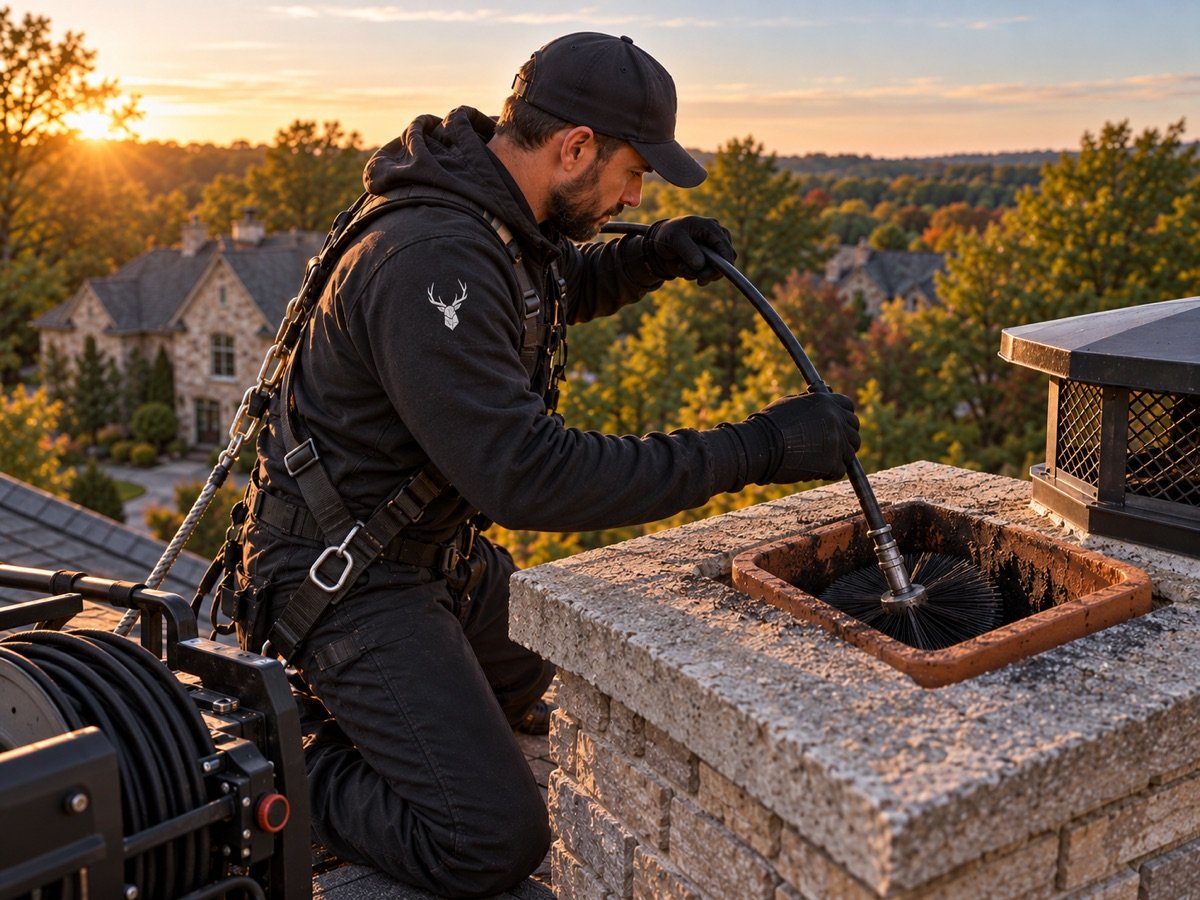
- Hardened and glazed deposits included
- Flue liner along its accessible length
- Deposit stage identified before work
WHAT CREOSOTE REMOVAL COVERS
Creosote removal targets the deposits a routine sweep leaves behind. Brushing lifts loose, flaky material; creosote that has hardened into a tarry layer, or cured into a glossy glaze bonded to the liner, does not respond to it. A brush passes across that surface rather than lifting it, which is why a flue can look largely unchanged after a sweep.
If the deposit is dry and flaky rather than hard, this is not the service you need — a chimney sweep covers it, at less cost and in less time. Where you are unsure which you are looking at, or the liner condition is itself in question, an inspection establishes both before anything is committed to.
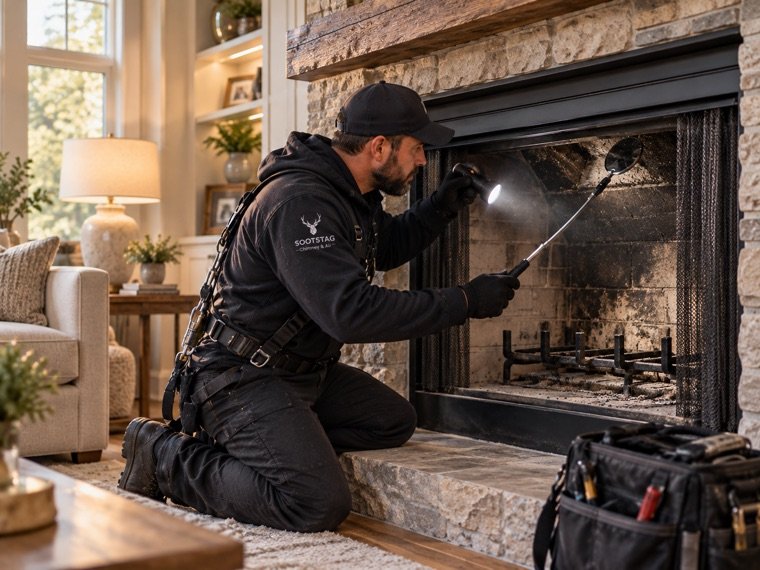
WHAT ARE YOU NOTICING?
Three of the observations that most often lead here, and what each one usually means.
A sweep did not shift it
Brushing removes loose and flaky deposits. Hardened or glazed creosote does not respond to it.
The deposit looks glassy
A shiny, tar-like surface on the liner is a later deposit stage and is treated differently.
The appliance is slow-burned
Long, cool burns and unseasoned fuel favour the deposits that harden rather than fall.
WHICH ONE DO YOU NEED?
These services overlap. Here is how to tell which one answers your situation.
Creosote removal is the fit
- Deposits are hardened, layered or glazed
- A previous sweep left material behind
- The liner surface is not reachable by brushing alone
A standard sweep may be enough
- Deposits are loose, dry and flaky
- The appliance is burned hot and on seasoned fuel
- The flue was cleared within a normal interval
WHAT THE SERVICE INCLUDES.
Every item below is part of the service. What a specific job needs is identified against the property itself.
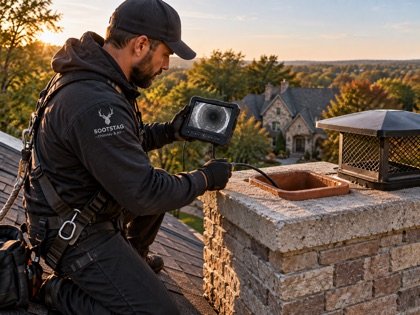
- Deposit type and depth identified along the flue
- Loose and flaky deposits removed from the liner
- Hardened and glazed deposits worked where the liner condition allows
- Smoke chamber and smoke shelf cleared of deposit
- Removed material collected and taken away
Covered within this service
- Glazed Creosote Removal
HOW THE WORK RUNS.
The sequence the work follows. What a particular visit needs is set by the system in front of us.
- 01 The deposit is identified Loose, flaky, hardened or glazed — the stage decides the method, and it is established before work begins.
- 02 Liner material and condition are confirmed What the liner is made of, and its state, sets what may be used on it.
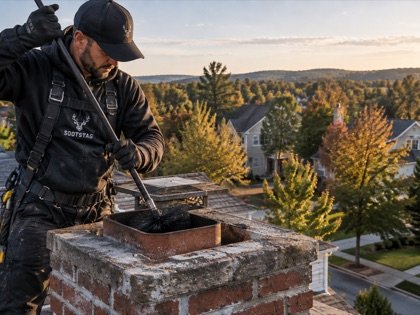
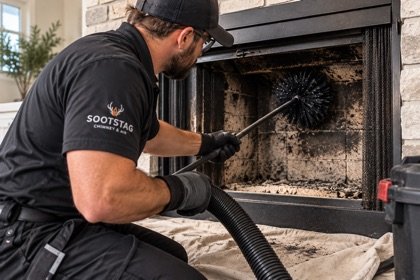
- 03 The opening is sealed and the area covered Removal of hardened deposits produces more material than a routine sweep.
- 04 Deposits are worked off the liner The method is matched to the deposit stage rather than applied uniformly.
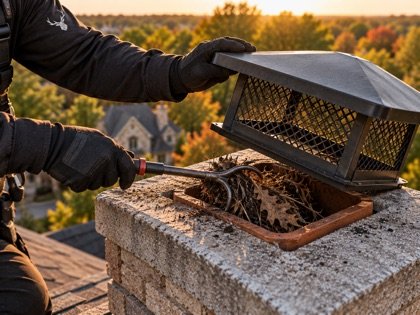
- 05 The cleared surface is checked and material removed What is left is looked at, and what came off leaves with the crew.
WHAT THE LINER LOOKS LIKE UNDERNEATH
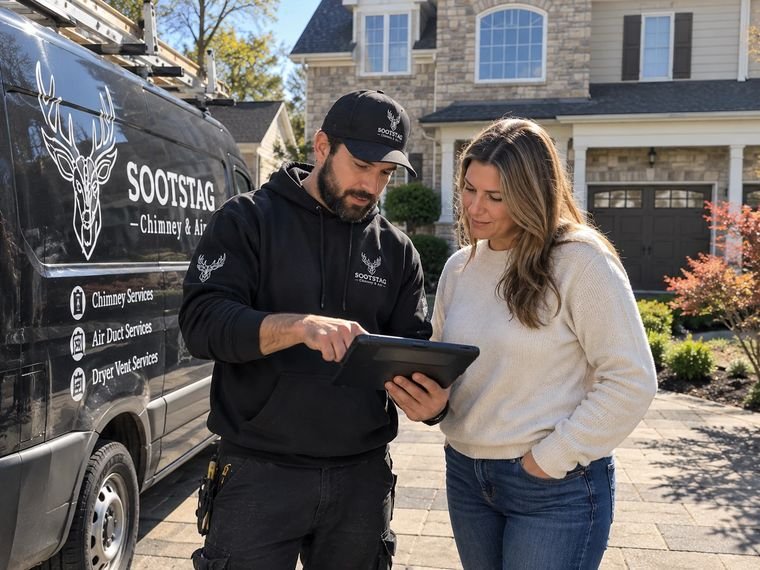
Removing a heavy deposit exposes the surface it was sitting on, and that surface has not been visible for as long as the deposit has been building. What is underneath is part of what the work produces.
Often it is a sound liner, and the result is simply a flue returned to its own dimensions. Sometimes the deposit was concealing cracking, spalling or displaced sections — findings that belong to an inspection rather than to cleaning, and that are described rather than quietly cleaned over.
This is why the service ends with the cleared surface being looked at rather than the job stopping when the last deposit comes off. A liner you cannot see is a liner nobody can make a decision about.
WHAT YOU ARE LEFT WITH.
The deposit stage is identified first
What the deposit is determines the method. That assessment happens before any work starts.
Hardened material is addressed directly
Deposits that brushing leaves behind are the specific target of this service.
The liner is returned to a workable surface
What remains after removal can be seen and assessed, which layered deposits prevent.
The result is inspectable
A cleared liner is the condition in which a survey can report on the flue itself.
Deposits a sweep will not shift?
Describe what the liner looks like and you will get a scope for removal.
WHAT SETS THE SCOPE.
These are the details that change what this job involves. Include what you know when you send a request — it makes the answer more useful.
Deposit stage
Flaky, hardened and glazed deposits each behave differently and are worked differently.
Extent along the run
A band of glazing near the top is a smaller job than a fully coated liner.
Liner material
What the liner is made of limits which methods may be used on it.
Burn history
Cool, slow burning on unseasoned fuel is what produces the deposits that harden.
WHY DEPOSIT STAGE CHANGES THE WHOLE JOB
Creosote is described in stages because it behaves differently at each, and the stage — not the word — decides the method. It is established first, along with the liner material, because clay, metal and cast liners tolerate different approaches.
Two jobs described identically over the phone can therefore be entirely different work. Extent matters as much as stage: a band of glazing near the top of a run is a smaller job than a liner coated along its length.
Deposits reach the later stages through cool, damped-down burning on unseasoned fuel — the relationship EPA Burn Wise best practices(opens in a new tab) describe from the other direction.
- FLAKY
- Dry and loose. Comes away under a brush.
- TARRY
- Harder and layered. Resists brushing.
- GLAZED
- Glossy, and fused to the liner surface.
WHAT TO HAVE READY.
Describe what you can see
Flaky and black, or shiny and tar-like — the description changes what is scoped.
Say what was tried
If a sweep was carried out and left material behind, that is useful to know.
Note how the appliance is burned
Fuel type and burn habits explain how the deposit formed.
WORTH UNDERSTANDING FIRST.
Creosote: Why the Type Matters More Than the Amount A quarter-inch of flaky soot and a quarter-inch of hardened glaze are the same measurement and completely different problems.
Creosote and Chimney Fires: What the Risk Actually Is Creosote is fuel that condenses inside the flue from the fire below it. That is the whole mechanism, and it is why the deposit is the thing that gets managed.
RELATED SERVICES.
The rest of the chimney family, each with its own scope.
Quick answer
How is creosote removal different from a sweep?
A sweep lifts loose and flaky deposit with brushes. Creosote that has been repeatedly heated and cooled hardens into a dense, glazed layer that a standard brush pass will not move, and removing it takes different tooling and more time. Which one a chimney needs is decided by the state of the deposit, not by how much of it there is.
CREOSOTE REMOVAL — COMMON QUESTIONS.
If your question isn't here, send it with an estimate request and we'll answer it directly.
Removal of creosote deposits from the flue liner, including the hardened and glazed stages that a brush passes over rather than lifts.
A sweep lifts loose, flaky deposits. This addresses material that has hardened or fused to the liner, which brushing leaves behind — which is why a flue can look largely unchanged after a routine sweep.
By how the deposit looks and behaves. Dull, dry and flaking is sweep territory. Layered, hard, or shiny and tar-like on the liner is this service. If you are unsure, describe what you can see and it is identified on site.
Cool, slow burning and unseasoned fuel let combustion gases condense heavily on the way up. Hot, brisk fires on dry wood leave far less. It is a function of how the appliance is run more than of the chimney itself.
Yes, and it is established first. Clay, metal and cast liners tolerate different approaches, and a liner already in poor condition narrows the options further.
That is reported rather than pushed. Some liners are in a state where continuing would do more harm than the deposits are doing, and the honest answer is that the flue needs a decision rather than another pass.
Whatever the deposit was concealing — usually a sound liner, sometimes cracking or displacement that has not been visible for as long as the build-up has been there. It is described once the surface is clear.
Leave it cold. The flue needs to be unlit for roughly a day before it can be worked on, and a suspected obstruction should not be burned against at all.
TELL US WHAT YOU NEED.
WE'LL COME BACK WITH A SCOPE.
Send the property type and the service you're after. You'll get a clear scope and a price — no obligation to book.
- Family-Owned
- 12+ Years of Experience
- Certified & Insured
- Residential & commercial
- Maryland and surrounding areas