Creosote: Why the Type Matters More Than the Amount
A quarter-inch of flaky soot and a quarter-inch of hardened glaze are the same measurement and completely different problems.
Chimney deposit gets discussed as though it were one thing measured in one way: how much is in
there. In practice the more useful question is what state it is in, because two chimneys with the
same quantity of deposit can need genuinely different work.
Soot and creosote are not the same material
Soot is loose carbon — the powdery black residue combustion leaves behind. It brushes off. Creosote
is what condenses out of smoke when the smoke meets a flue wall cooler than it is: the unburned
components of the fire, deposited as a liquid or a vapour that then sets.
That difference matters because creosote keeps changing after it lands. Soot does not.
The stages, and what each one means for the work
Loose and flaky
The early form: dull, black, easily disturbed, and often visible as flakes falling into the
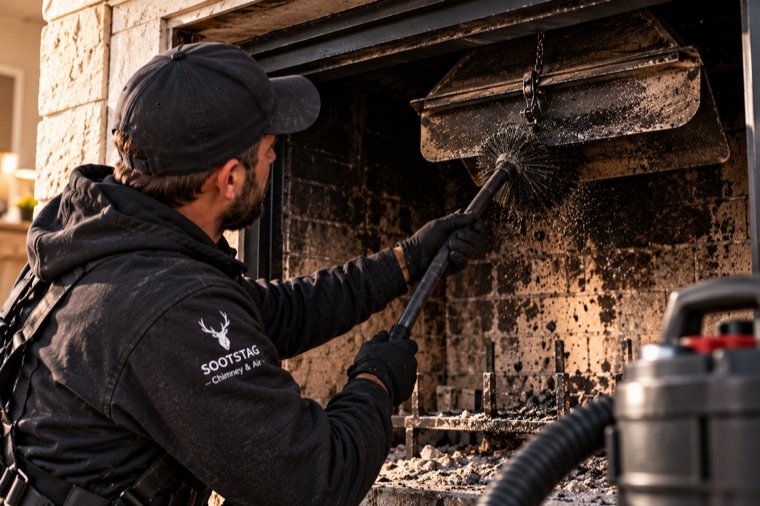
firebox. This is what a chimney sweep is designed to remove.
Brushes and a vacuum take it out, and the run is left ready for inspection.
Hard and crusty
Repeated heating and cooling drives off what is volatile and compacts what remains. The deposit
becomes harder, sticks more firmly, and takes more mechanical effort — but it is still material a
sweep can address, with the right tooling and more passes.
Glazed
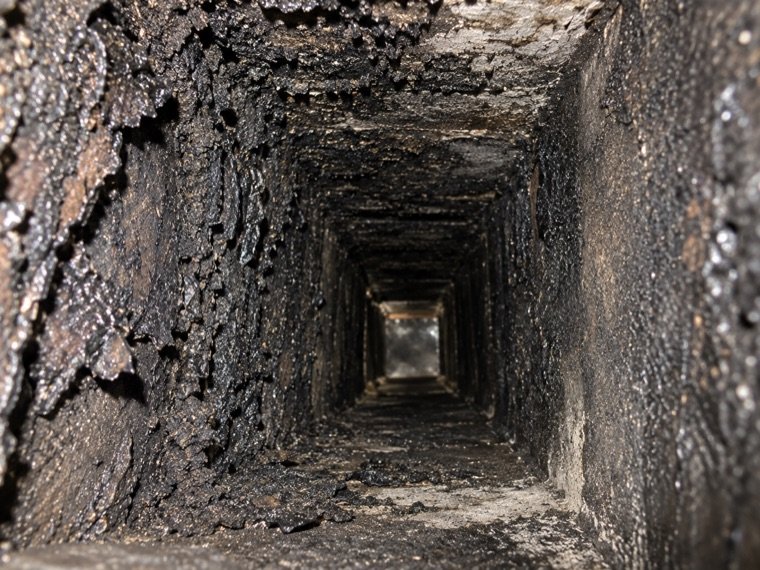
The late form is dense, shiny and tar-like, effectively fused to the flue wall. A standard brush
pass will not shift it. Removing it is a different service, using different tools, and it is scoped
separately for that reason — see creosote removal.
What actually drives which stage you get
Four things do most of the work, and none of them is the calendar:
- How the appliance is run. A slow, oxygen-starved burn produces cool smoke carrying
a lot of unburned material. That is the condition that glazes a liner. - What you burn. Unseasoned or wet wood burns cooler and smokier; the moisture has
to be driven off before the wood can burn properly, and everything the fire does not consume goes up
the flue. - How cool the flue runs. An external stack, an oversized flue for a small
appliance, or a long run all keep the flue wall colder, and a cold wall is where smoke condenses. - The surface it lands on. A rough or deteriorating liner catches and holds more
than a smooth one, which is one reason the condition of the flue is part of an assessment rather
than an afterthought.
Why “how much” is the wrong first question
An eighth of an inch of glaze is a bigger job than half an inch of flakes. A measurement on its
own does not tell you which you have, and it is not something a homeowner can establish from the
hearth — the firebox and smoke chamber are visible, the run above them is not.
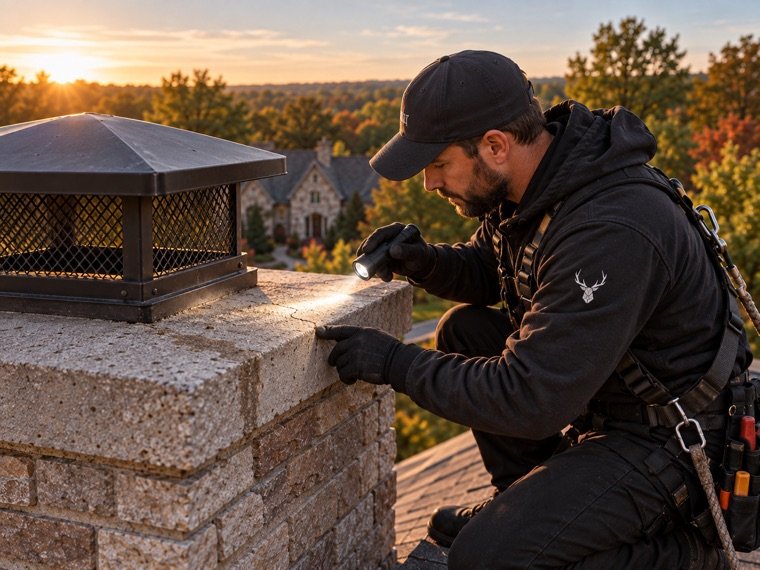
That is what an inspection settles. It puts a camera in
the actual flue and reports what is there and what state it is in, which is the information the scope
is then written against.
What to do with a chimney you are unsure about
Have it looked at before the heating season rather than during it, and describe what you have
noticed rather than guessing at a service. Flakes in the hearth, a fire that has become harder to
establish, or a strong smell in humid weather are all worth mentioning: each one points somewhere
slightly different, and together they usually point at the same place.
Quick answer
What is the difference between soot and creosote?
Soot is the loose, powdery carbon left by combustion; creosote is what condenses onto a cool flue wall from smoke that has not fully burned. Creosote also changes over time — it starts flaky and, with repeated heating and cooling, hardens into a dense glaze that an ordinary brush will not remove. A sweep handles the loose material. Hardened deposit is a separate job with different tooling.
Common questions
Can I tell which stage my chimney has?
Sometimes, from the firebox: loose black flakes falling into the hearth are the early stage. A shiny, tar-like coating you can see on the smoke chamber is the late one. What you cannot see from below is the state of the run higher up, which is where it usually differs.
Does burning hotter fix it?
Burning dry, well-seasoned wood in a hot fire produces less deposit going forward. It does not remove what has already hardened onto the flue wall.
Is a chemical treatment enough on its own?
Products exist that are intended to change the character of hardened deposit so it can be removed mechanically. They are a step before removal, not a substitute for it — nothing leaves the chimney until something takes it out.
Why does my chimney build deposit faster than my neighbour's?
Because deposit tracks how the appliance is run, not how old the house is. A stove damped down to burn slowly overnight produces exactly the cool, particle-laden smoke that coats a liner; an open fire burning dry hardwood hot produces markedly less.