Creosote and Chimney Fires: What the Risk Actually Is
Creosote is fuel that condenses inside the flue from the fire below it. That is the whole mechanism, and it is why the deposit is the thing that gets managed.
Smoke leaving a fire carries unburnt material. When it meets a flue wall cooler than itself, some
of that material condenses onto the surface. That deposit is creosote, and it is combustible — which
is the entire reason chimneys are swept.
Stated plainly: a flue carrying a heavy deposit contains fuel, in the path the appliance’s own
heat travels along. Nothing about that is unusual or alarming on its own. It is a condition that is
managed, and the managing is the point.
What produces more of it
- Cool, slow burning. A damped-down overnight burn produces exactly the cool,
particle-laden smoke that condenses. A brisk, well-ventilated fire produces markedly less. - Wet or unseasoned wood. Energy that goes into evaporating water does not go
into the fire, so the smoke leaves cooler and carries more. - A cold flue. An exterior stack, or an oversized flue that never warms through,
gives condensation more surface to happen on. - Repeated heating and cooling. This is what turns loose flake into the hard,
shiny layer a brush will not move.
What the standard actually asks for
NFPA
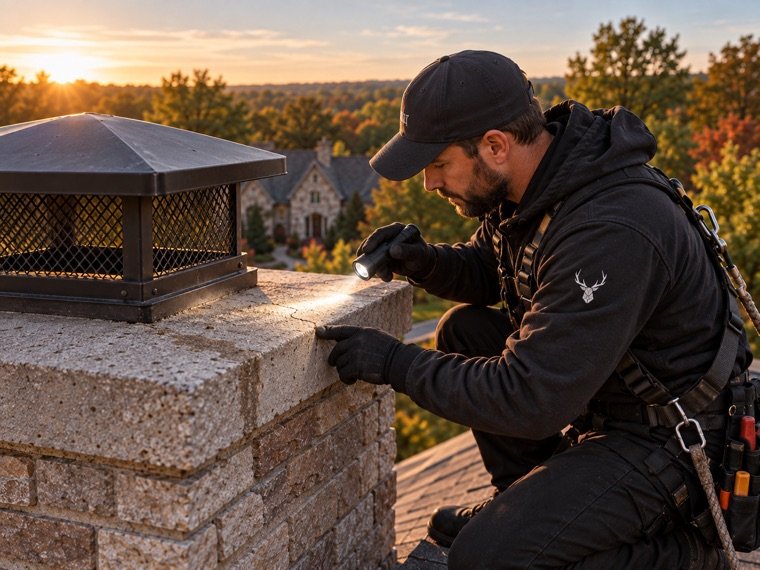
211, the National Fire Protection Association’s standard for chimneys, fireplaces, vents and
solid fuel-burning appliances, calls for chimneys to be inspected annually, and cleaned when the
inspection finds deposit that warrants it.
That is a deliberate arrangement and worth reading carefully: the assessment is on a
schedule, the cleaning is on the findings. It is not a recommendation to sweep once a year
regardless, and it is not a licence to leave a heavily used flue alone because the date has not come
round. How often a chimney actually needs
sweeping works through what moves the interval.
Signs that should not wait
- A dense, shiny, tar-like coating visible in the flue or firebox
- Flakes of hard black material falling into the hearth
- A strong, acrid smell from the fireplace when it is not lit
- Smoke entering the room, which can mean a restricted flue —
among other causes - Any loud noise, vibration or roaring from the chimney during a fire, after which the appliance
should not be used until the flue has been looked at
What sweeping does, and what it does not
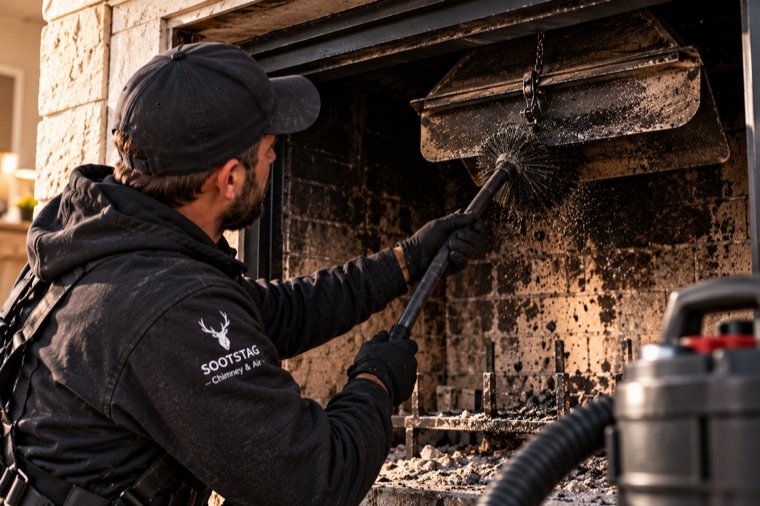
A sweep removes the deposit present on the day, which is a real and useful thing. It does not
make a chimney permanently anything: deposit begins accumulating again with the next fire, at a rate
set by how the appliance is used.
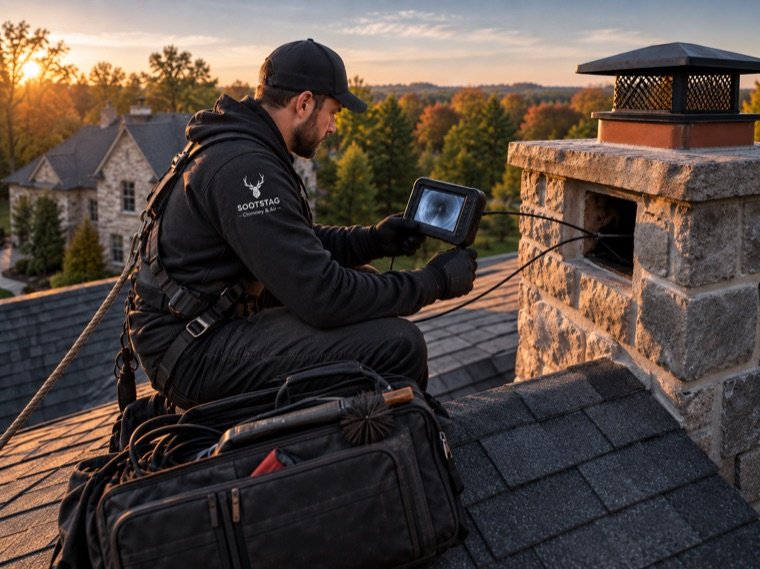
It also does not establish the condition of the structure. Those are two different jobs, and
which one your situation calls for is what
sweep or inspection is for. This page makes no claim about what
sweeping prevents; it describes what creosote is, what produces it, and what the published standard
asks for.
Quick answer
Does creosote in a chimney cause fires?
Creosote is combustible, so a flue carrying a thick deposit contains fuel in the path the fire's own heat travels along. That is the mechanism, and it is why the deposit is managed rather than tolerated. What no one can tell you is a probability for your chimney — that depends on how much you burn, what you burn, how the appliance runs and what condition the flue is in.
Common questions
How much deposit is too much?
The amount is the wrong first question. A thin glazed layer is a different proposition from a thicker flaky one, because they are different materials — the stage it has reached matters more than the depth.
Does burning hot fires keep a flue clean?
Hotter, well-ventilated burning produces less deposit than smouldering does, so it slows accumulation. It does not remove what is already there, and deliberately over-firing an appliance to burn deposit off is not a maintenance method.
Are chemical logs and powders a substitute?
They are marketed as conditioners rather than removers, and none of them empties a flue. Anything that changes deposit still leaves it in the chimney to come out.
We have a gas appliance. Does any of this apply?
Creosote is a solid-fuel product, so a gas appliance produces very little. The flue still needs looking at: obstruction, moisture damage and failed liner joints are not fuel-specific.