Why Your Fireplace Smells When It Is Not Lit
A chimney smell in warm, humid weather is not the chimney being old. It is the chimney telling you what is inside it and which way the air is moving.
The complaint is nearly always the same: the fireplace has not been lit for months, and on a warm
damp day the room smells of it. Nothing has changed about the chimney. What has changed is the
weather, and it has changed two things at once.
The smell needs a source and a route
Both have to be present. A clean flue with air coming down it does not smell. A dirty flue with air
going up it does not smell either — that is every chimney in winter, with a fire lit.
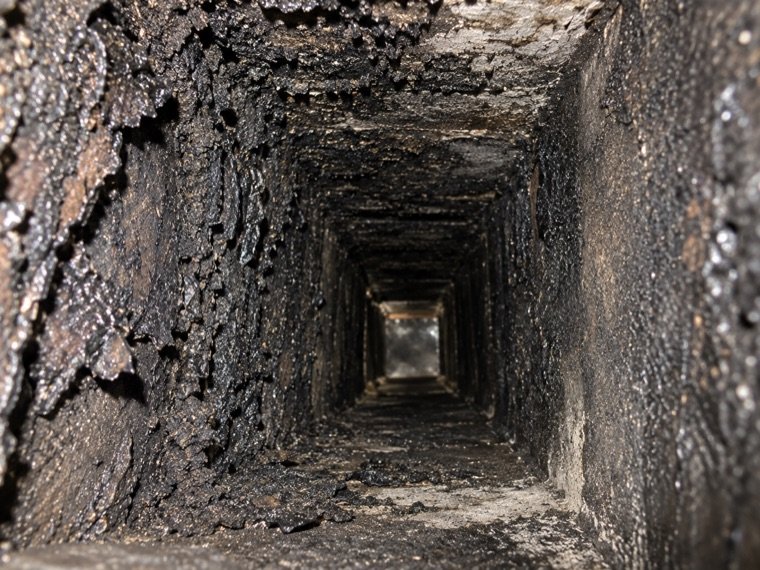
The source: what is in the flue
Creosote and soot are hygroscopic: they take up moisture from the air. Humidity reacts with what
has been deposited on the flue wall and releases the sharp, acrid smell people describe as
“chimney”. The more deposit there is, and the further it has hardened, the stronger the effect.
Deposit is not the only candidate. Nesting material, leaf litter, or a dead animal in the run all
smell, and they smell differently — heavier, more organic, less sharp. Water is a third: a cracked
crown or a failed cap lets rain in, and a damp flue smells musty rather than burnt.
The route: which way the air is moving
A chimney is a vertical shaft connecting the house to the outside, and air moves through it in
whichever direction the pressure difference sends it. In cold weather warm indoor air rises and
leaves through the top of the house, which pulls air down the chimney only if the house is tight
elsewhere. In warm weather the difference often reverses, and a house running air conditioning is
frequently at slightly lower pressure than outside — so outside air comes down the flue, through the
firebox, and into the room, carrying the smell with it.
Why the usual fixes disappoint
Deodorants and air fresheners work on the room, not on the flue, and stop working when they run
out. Closing the damper helps in proportion to how well it seals, which in an older fireplace is
often not very well. A glass door reduces the flow into the room but does not change what is
happening in the chimney.
None of these is wrong, exactly. They are just working on the last few feet of a problem that
starts thirty feet up.
What actually addresses it
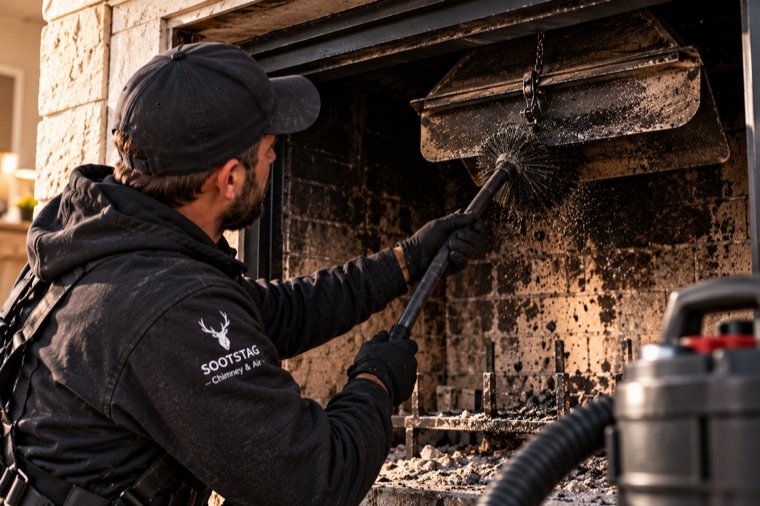
Removing the source is the part that lasts. A sweep takes
out the deposit that is reacting with the humidity; firebox
and smoke chamber cleaning deals with the part closest to the room, which is often the part
producing most of the smell you actually notice.
Where the smell is not deposit, the answer is whatever it actually is: clearing an obstruction,
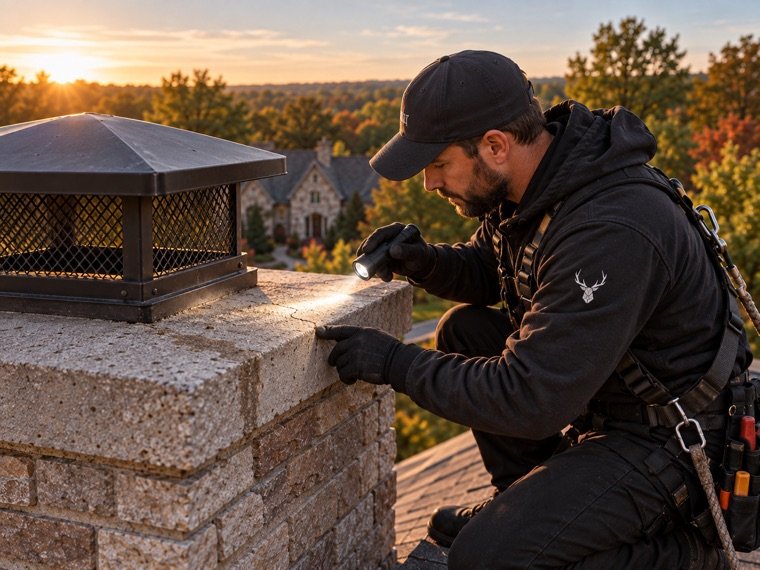
or finding where water is getting in. An inspection is what
separates those, because they smell different but they are not distinguishable from the hearth.
What to tell us if you are asking about it
Three things narrow it down quickly: what the smell is like — sharp and burnt, musty, or organic;
when it is worst — humid days, windy days, or when the air conditioning is running; and whether
anything has changed recently, such as new windows, a new extractor, or a fireplace that has been
closed off. Those three answers usually identify both halves of the problem before anyone arrives.
Quick answer
Why does my fireplace smell worse in summer?
Two things coincide. Humidity reacts with creosote and soot in the flue, which is what produces the smell in the first place, and warm outside air makes it more likely that air flows down the chimney into the house rather than up and out. In winter the fire itself drives air the other way, so the same deposit is not noticeable.
Common questions
Will an air freshener or a chimney deodorant fix it?
It covers the smell while it lasts. It does not remove what is producing it, and the smell returns when the product does not.
Does closing the damper solve it?
A well-sealing damper reduces how much air comes down, which usually reduces the smell. It does not remove the source, and many older dampers no longer seal well enough to make much difference.
Could it be an animal rather than deposit?
Yes, and it is worth ruling out. Nesting material, or an animal that has died in the flue, produces a distinctly different smell from creosote and needs removal rather than cleaning.
My fireplace has been closed off for years. Should it still smell?
A capped or blocked-off fireplace with the flue left in place still holds whatever was in it and still admits moisture, and the room below is no longer being ventilated by it. Closed-off fireplaces are a common source of exactly this complaint.