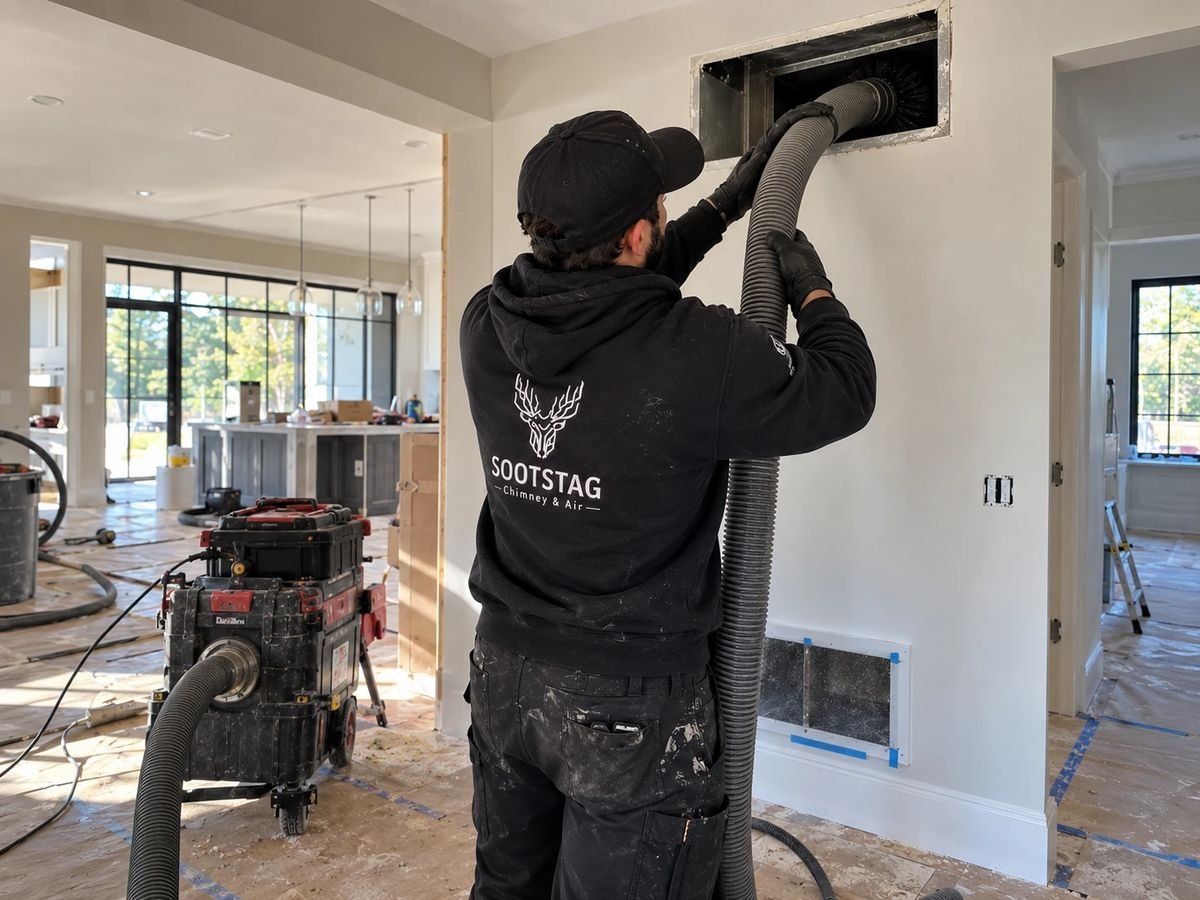
Why the Return Side of Your Duct System Is the Dirty One
Supply runs get the attention because that is where the air arrives. The returns are where it is collected, and that is where the accumulation is.
If you have ever taken a return grille off and a supply register off on the same afternoon, you
have already seen this. They do not look the same, and the difference is not subtle.
The filter is at the wrong end for the returns
A forced-air system runs in a loop. Air is pulled out of the rooms through return grilles, travels
back through the return ducts to the equipment, passes through the filter, is conditioned, and is
pushed back out through the supply branches.
Read that order again and the answer falls out. Everything the returns carry, they carry
before the filter. Everything the supplies carry, they carry after it. The return side is
handling unfiltered room air along its entire length; the supply side is handling air that has already
been cleaned.
Fewer, larger, busier
Most systems have many supply branches and relatively few returns — sometimes a single large one.
The total airflow is the same in both directions, so each return is moving a much larger share of it
than each supply branch.
More air through fewer, larger ducts means more opportunity for anything airborne to make contact
and stay.
Where it actually accumulates
- Behind the grille. The first foot or two of a return run catches the coarsest
material — hair, lint, and whatever was on the floor near it. - At direction changes. Air turns a corner faster than the particles it is carrying
can, so anything that will settle tends to settle there. - At the equipment. The end of the return journey is the blower compartment, which
is why furnace cleaning so often belongs with duct work.
Why this matters when you are reading a quote
“We’ll clean the vents” is ambiguous, and the ambiguity usually resolves in favour of the supply
registers — there are more of them, they are easier to reach, and cleaning them is what makes a
visible difference in the room.
The question worth asking is direct: are the returns in the scope, and are they being cleaned back
to the equipment. Our duct cleaning covers both sides
because the alternative is a cleaning that misses the loaded half — and the detail of what a full job
includes is in what actually happens during a duct
cleaning.
One thing you can check yourself
Lift a return grille — most come off with two screws or a clip — and look at the first stretch of
duct behind it with a torch. That is the most loaded, most accessible part of the system, and it is a
fair sample of what the rest of the return side is doing.
Quick answer
Why are return air ducts dirtier than supply ducts?
Because of where the filter sits. The return side carries unfiltered room air — with everything the room contains — from the grilles back to the equipment, and the filter is at the end of that journey rather than the start. The supply side carries air that has already been filtered. Returns are also fewer and larger, so each one handles a bigger share of the total airflow.
Common questions
How many returns should a house have?
It varies with the design. What matters more is that the ones present are actually in the scope of the work, because there are fewer of them and each is doing more.
Can I clean a return grille myself?
The grille, yes — it lifts off and washes. The run behind it is a different matter, and it is the part carrying the material.
Does a better filter fix the returns?
It changes what reaches the equipment. It does not change what the return runs carry to get there, because they are upstream of it.
Should the returns be cleaned every time?
If the ducts are being cleaned at all, yes. Leaving the loaded side is most of the work left undone.