
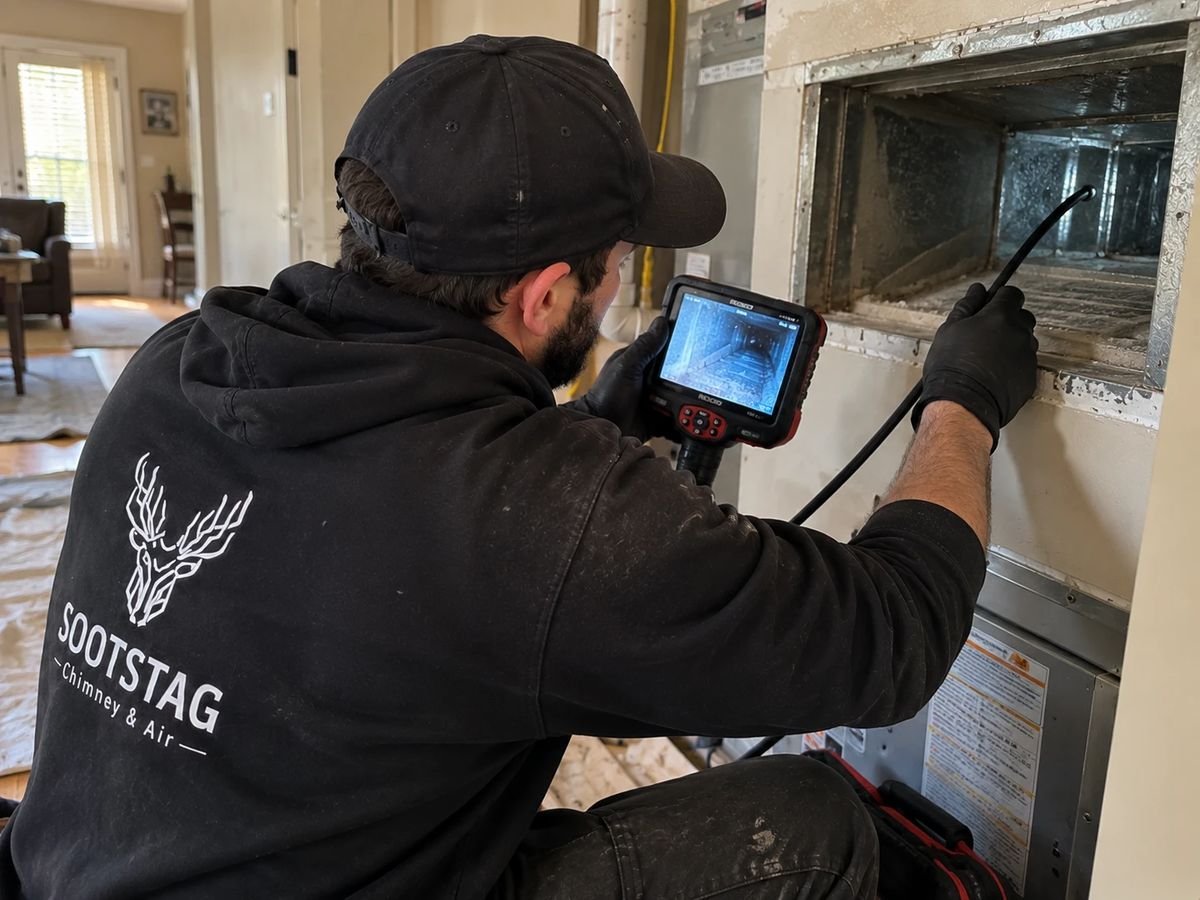
How to Tell If Your Air Ducts Actually Need Cleaning
The EPA does not recommend cleaning ducts on a routine schedule. It does identify the conditions that justify it. Here is how…

Chimney, air duct and dryer vent work across 10 places in Howard County. Howard County is largely planned and newer development, with an older core around Ellicott City. Systems are generally younger here, so the work is more often about airflow and accumulation than about deteriorating masonry.
Most of this county is planned and relatively recent, which changes what is worth asking. Where systems are young and consistent, the honest question is whether cleaning is needed at all rather than when it was last done — and the answer is allowed to be no. Around the older core the opposite applies: original masonry genuinely needs assessing.
Where to start
For newer housing, an inspection that can return a no is worth more than a clean sold on a schedule. For the older core, start with the flue and its history. Where a property is commercial or industrial, the installation itself sets the scope.
Cleaning and inspection across supply, return and connected equipment.
All air duct servicesCleaning, inspection and obstruction removal along the vent line.
All dryer vent servicesThe pages below reflect that divide: some lead with whether the work is needed, some with what an altered flue requires, and one with commercial scoping.
The EPA does not recommend cleaning ducts on a routine schedule. It does identify the conditions that justify it. Here is how…
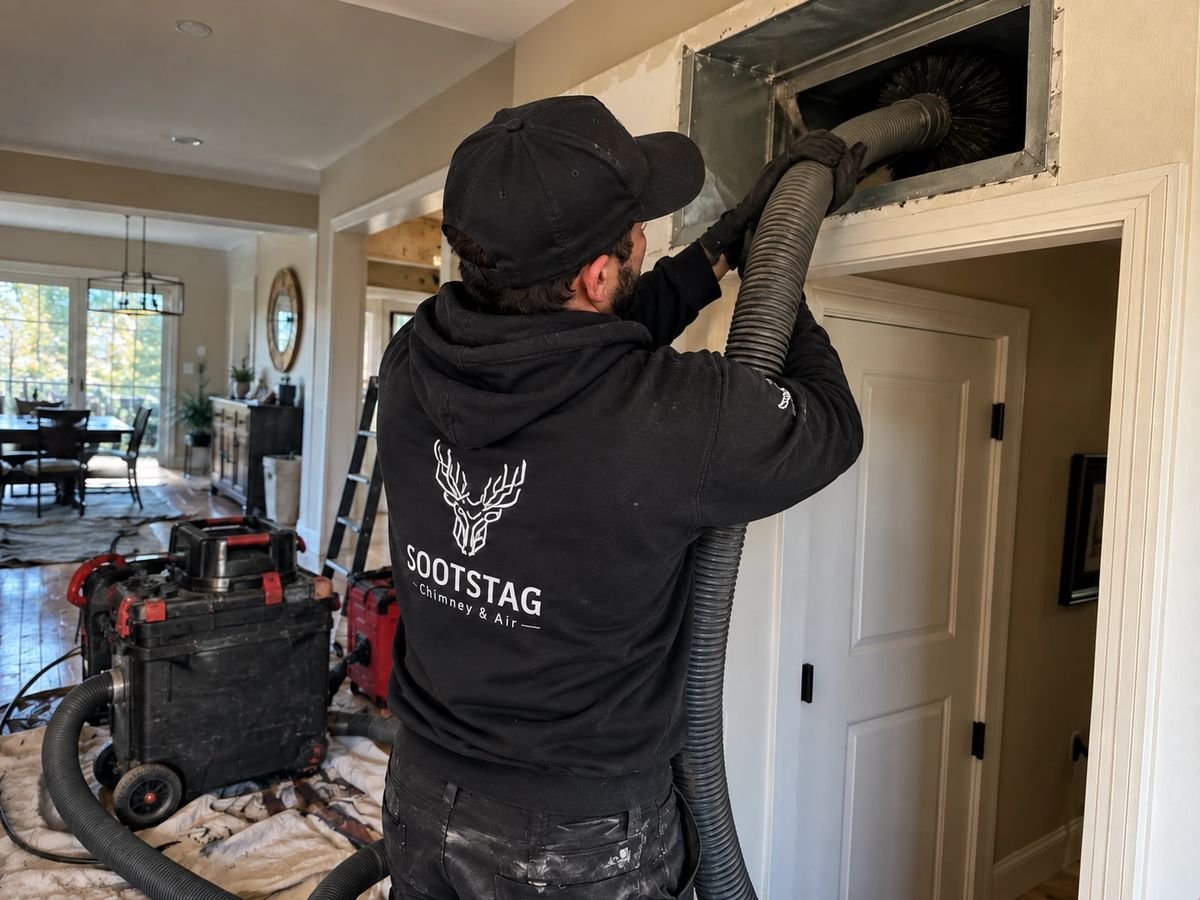
A real duct cleaning reaches every branch and both sides of the system. Knowing what the work involves is what lets you…
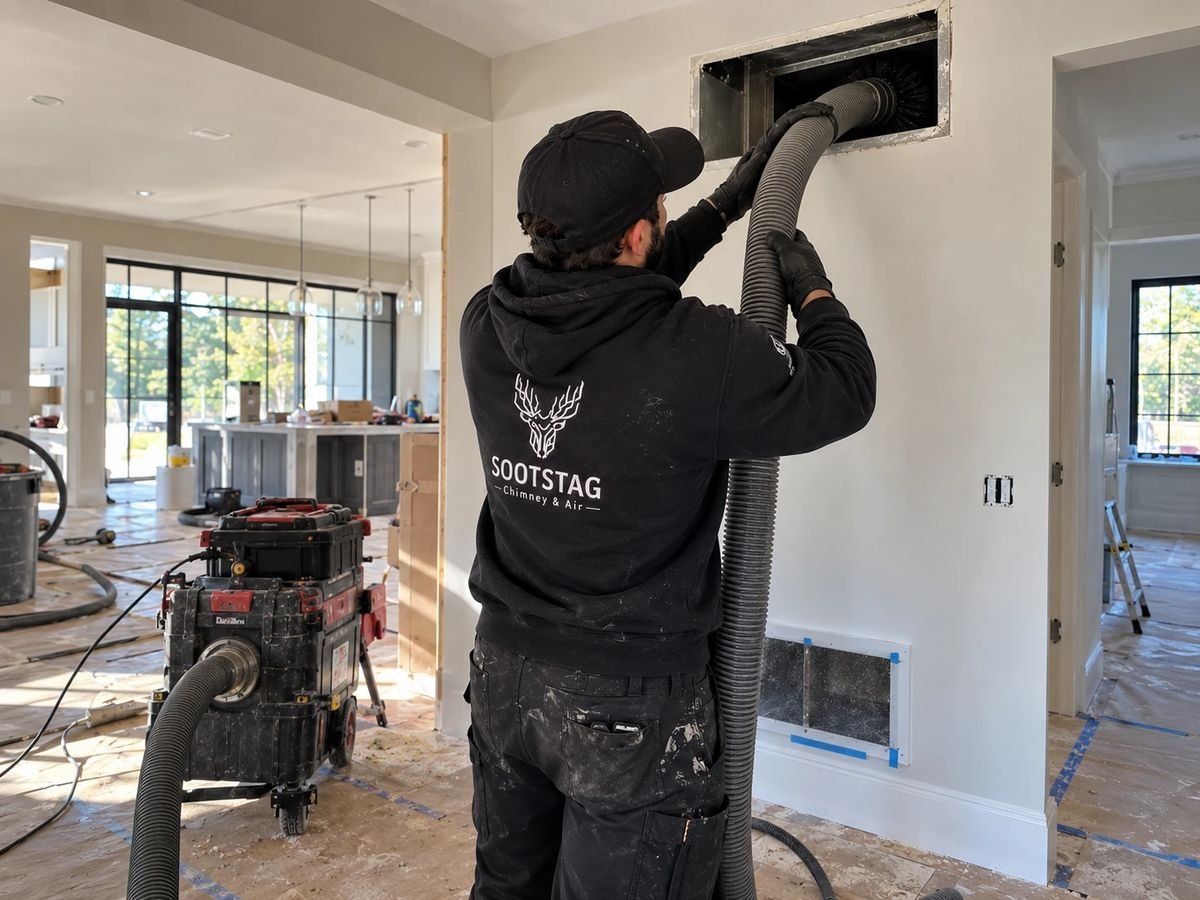
Construction dust is finer, more abrasive and produced in far greater quantity than household dust — and a heating system running during…
Quick answer
Chimney, air duct and dryer vent work across 10 places in Howard County, for residential and commercial properties. For newer housing, an inspection that can return a no is worth more than a clean sold on a schedule. For the older core, start with the flue and its history. Where a property is commercial or industrial, the installation itself sets the scope. Each of those places has its own page describing what the housing there usually involves, and coverage for a specific address is confirmed on the estimate request rather than assumed from the town name.
If your question isn't here, send it with an estimate request and we'll answer it directly.
The one for your own town, if it is listed. It describes what the building stock there usually involves, which is more useful than a county-wide summary. If your town is not listed, this page and an estimate request are the right route.
The services are identical everywhere. What changes is the housing — flue type, duct layout, the length of a dryer run — and that is what the scope is written against, which is why each place here has its own page.
Yes. Multi-unit buildings and commercial installations are scoped the same way as a house — against the installation actually present, which in those buildings usually means shared runs and access that has to be arranged first.
Against the property, not a package. The system in front of us — its length, layout, access and condition — is what sets the figure, and it is given after the system has been seen rather than before.
Send the property type and the service you're after. You'll get a clear scope and a price — no obligation to book.