Chimney Inspection Levels: What 1, 2 and 3 Actually Cover
The three levels are defined in a public standard, and which one applies is decided by the circumstances rather than by what anyone would prefer to sell.
“Chimney inspection” describes three different pieces of work, and the difference between them is
not a matter of thoroughness for its own sake. The levels are defined in
NFPA
211, the National Fire Protection Association’s standard for chimneys, fireplaces, vents and
solid fuel-burning appliances, and which level applies is decided by circumstances.
What this page is, and is not. It explains terms defined in a public standard.
It is not a description of what SootStag sells. SootStag does not claim any NFPA 211 certification,
accreditation or conformance, and does not sell chimney inspections by level. What a
chimney inspection covers here is set out on its
own page, in its own words.
Level 1 — the readily accessible
This is the inspection that applies when the appliance and its use are unchanged and you are
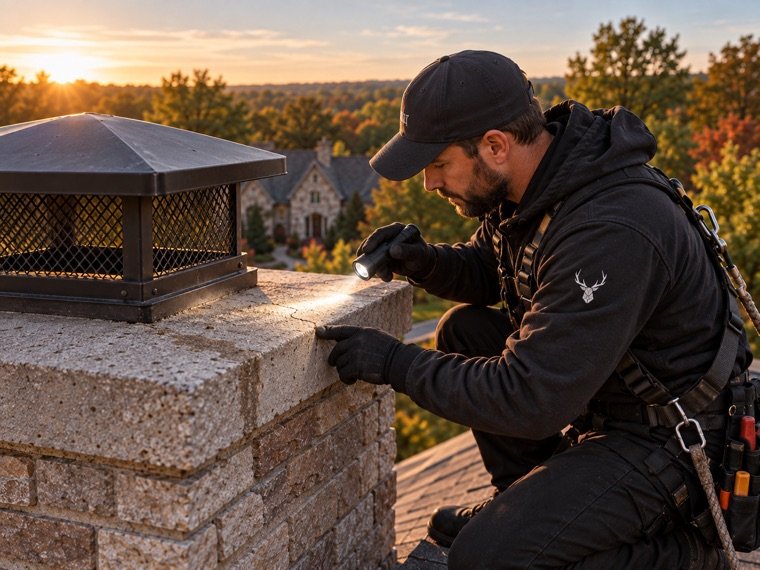
having the chimney maintained in the ordinary way. It covers the readily accessible portions of the
chimney exterior and interior and the accessible parts of the appliance and the connection between
them.
What it is establishing is that the chimney is structurally sound, that the flue is clear of
obstruction and combustible deposit, and that the basic installation is what it should be. No part of
the building is opened up, and nothing that requires dismantling is examined.
Level 2 — when something has changed
A Level 2 includes everything in a Level 1 and adds the accessible concealed areas of the building
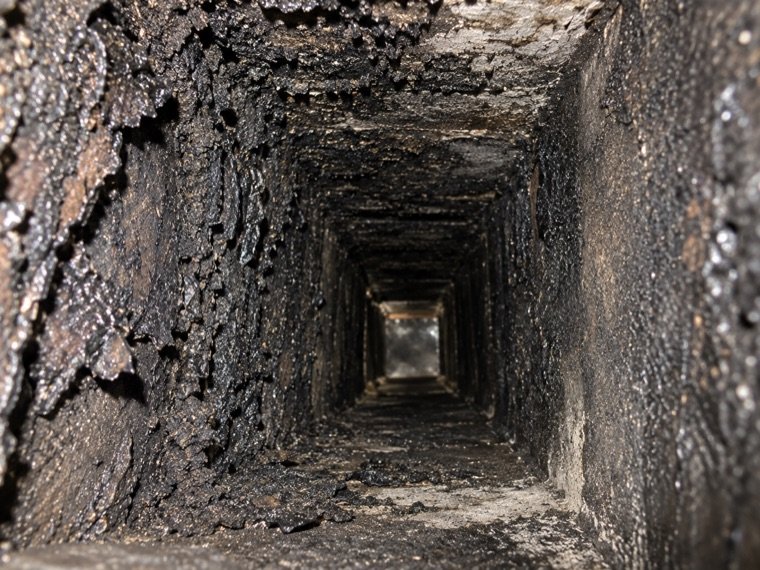
where the chimney runs: attics, crawl spaces and basements. It also includes a video survey of the
flue interior along its length.
The standard identifies when this is the applicable level, and the triggers are all changes of
circumstance rather than changes of opinion:
- a change of appliance, or a change in the fuel being burned
- a change to the shape or material of the flue
- the sale or transfer of the property
- an event that could have damaged the chimney — a chimney fire, a storm, an earthquake, a lightning
strike, or a building fire
The reason the video survey belongs here is straightforward: most of a flue is not visible from
either end, and after a change the parts you cannot see are exactly the parts in question.
Level 3 — when access has to be created
A Level 3 covers concealed areas that cannot be reached without removing or demolishing part of
the chimney or the building — a chimney crown, a wall section, an enclosure. It applies when a Level 1
or 2 has given reason to suspect a serious hazard, and it is not something anyone begins with.
Why the level depends on circumstances
The three levels are not degrees of thoroughness that a customer chooses between. Each one is
defined by a situation: nothing has changed, something has changed, or something is suspected. That
is why “which level do I need?” is answered by describing what has happened to the chimney, not by
comparing prices.
It is also why deposit gets in the way of assessment generally. A flue coated in creosote cannot
be examined, because the deposit is what you would be looking at — which is why sweeping and
assessment often belong in the same visit. See
how often a chimney actually needs sweeping for
how the two relate.
Quick answer
What is the difference between a Level 1 and Level 2 chimney inspection?
A Level 1 inspection covers the readily accessible parts of the chimney and appliance and confirms the flue is clear and the structure sound, and it applies when nothing has changed. A Level 2 adds the accessible concealed areas — attics, crawl spaces, basements — and a video survey of the flue interior, and it is what applies after a change of appliance or fuel, a property sale, or an event that could have damaged the chimney. Both are defined in NFPA 211.
Common questions
Which level do I need?
If nothing has changed and you are having the chimney maintained, Level 1. If the appliance or fuel has changed, if the house is being sold, or if something has happened that could have damaged the chimney, Level 2. Level 3 follows from a Level 1 or 2 that found reason for it.
Is a camera survey always included?
A video survey of the flue interior belongs to a Level 2. It is the practical way to see the parts of the run nobody can look at directly.
Does the chimney need to be swept first?
Usually, yes, and that is not a way of adding work. A liner coated in deposit cannot be assessed, because the deposit is what you would be looking at.
Does an inspection cover the appliance as well?
It covers the connection between the appliance and the chimney and whether the chimney is appropriate for what is attached to it. Servicing the appliance itself is separate work.