
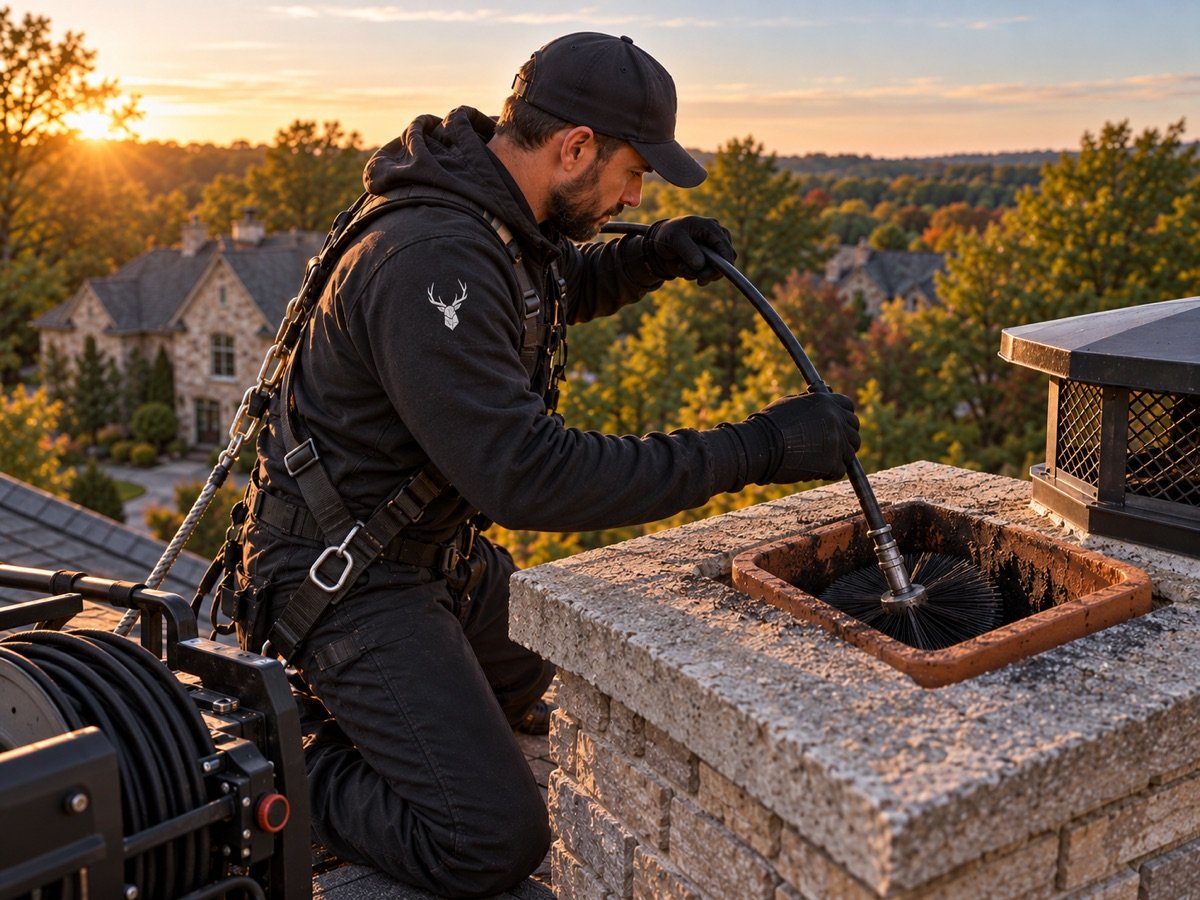
Creosote: Why the Type Matters More Than the Amount
Creosote is not one substance. It forms in stages, and the stage it has reached decides whether a sweep will shift it…

Around Dayton a wood stove or open fire is often doing real work through the winter rather than being lit a dozen times. Deposit tracks use, so a flue in regular service builds faster and reaches a harder state sooner than the same flue used occasionally.
Start from what you are noticing rather than from a service name. Each of these points somewhere different.
Dayton is a low-density area of larger properties, where wood stoves and open fires are more often a primary heat source than a feature. That changes how quickly deposit builds and how often the flue should be looked at.
What that tends to mean
When a stove or open fire is doing real heating rather than providing an evening's atmosphere, the flue is in service for months rather than hours. That changes both how quickly deposit accumulates and what state it reaches.
Regular use is what drives the interval, and a chimney sweep is the pass that lifts early-stage deposit.
What you can check yourself
Note how the appliance is run as much as how often — a fire damped down to burn slowly overnight produces markedly more deposit than the same fuel burned hot.
What actually drives the interval is covered in more detail.
That is a description of the building stock, not a finding about your property. The scope for any address is set after the system has been seen.
The hearth is covered and the firebox sealed to the vacuum before anything is brushed, so what comes off the flue wall leaves in the machine. The smoke chamber, shelf and damper are cleared as part of it.
Get a free estimateSweeping, inspection and creosote removal for fireplaces and flues.
Cleaning and inspection across supply, return and connected equipment.
All air duct servicesCleaning, inspection and obstruction removal along the vent line.
All dryer vent services
Creosote is not one substance. It forms in stages, and the stage it has reached decides whether a sweep will shift it…
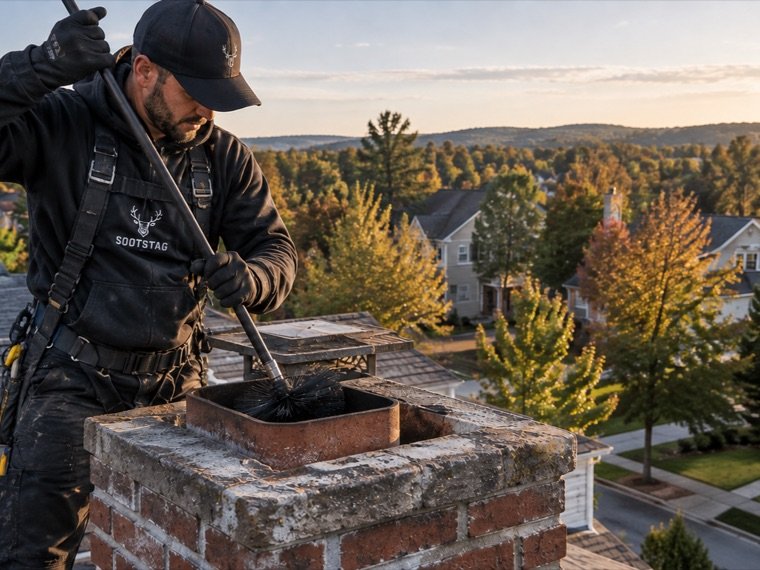
Sweeping frequency depends on what you burn and how you burn it, not on a fixed schedule. Here is what actually drives…
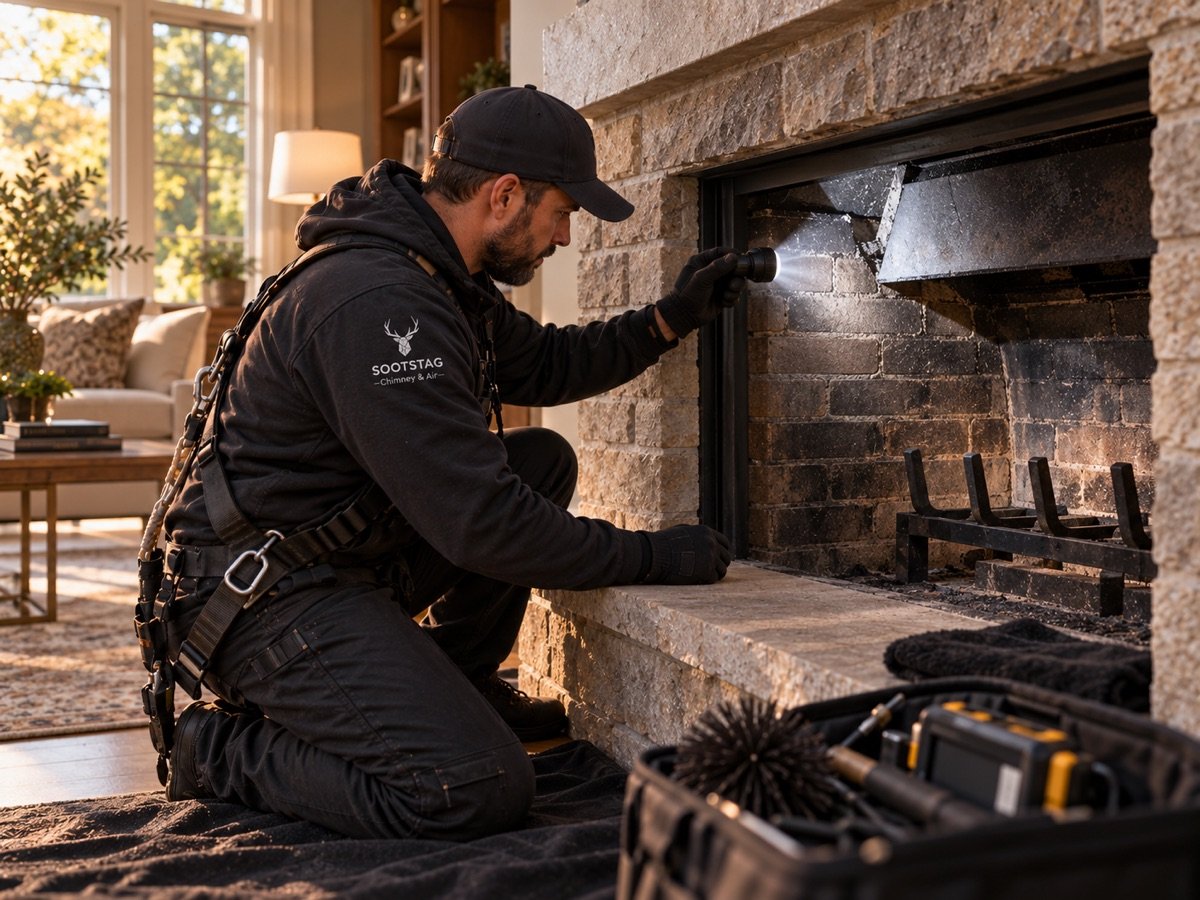
Fireplace odour has two ingredients: something in the flue, and air coming down rather than going up. Both are addressable, and masking…
Quick answer
Dayton is one of the places we cover in Howard County, and chimney work is where most enquiries here start — Note how the appliance is run as much as how often — a fire damped down to burn slowly overnight produces markedly more deposit than the same fuel burned hot. Chimney, air duct and dryer vent services are all available, for residential and commercial properties. Scope and price are set against the system once it has been seen, so send the property type and what you are noticing to get a real figure.
If your question isn't here, send it with an estimate request and we'll answer it directly.
Dayton is one of the places we publish coverage for, as part of Howard County. Coverage for a specific address is confirmed on the estimate request rather than assumed from the town name — you get a real yes or no for your address.
Considerably. Unseasoned or wet wood burns cooler and smokier, and cooler smoke condenses more readily on the flue wall. Dry, well-seasoned hardwood burned hot leaves markedly less behind.
A damped-down fire produces exactly the cool, particle-laden smoke that coats a liner. It is the classic recipe for heavy deposit, whatever the appliance.
Do not light a fire: an obstructed flue does not vent, and nesting material burns. Native migratory birds are protected, so an active nest is assessed before anything is disturbed.
There is no town price. The figure follows the system in front of us — its length, layout, access and condition — so it is set against your property rather than your postcode. The estimate is free and commits you to nothing.
Send the property type and the service you're after. You'll get a clear scope and a price — no obligation to book.