
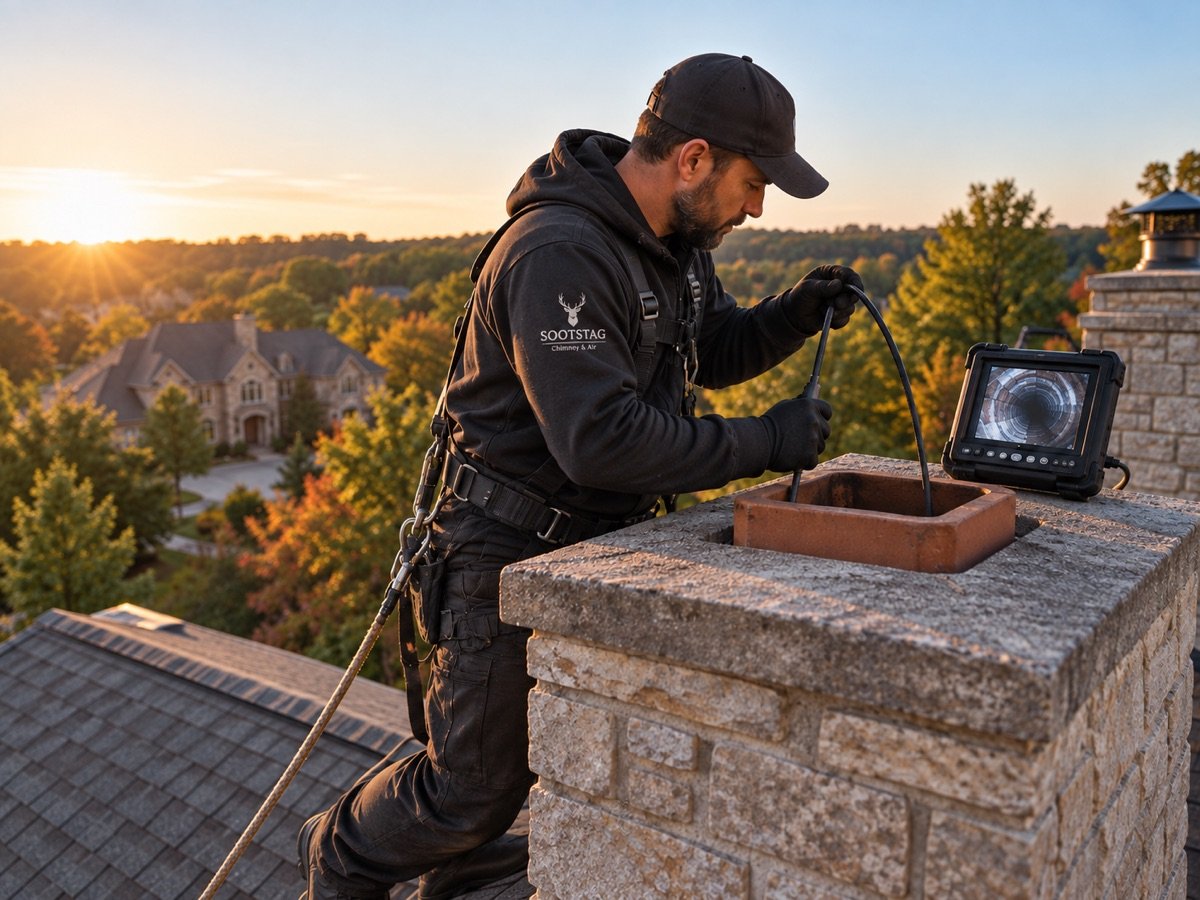
Chimney Inspection Levels: What 1, 2 and 3 Actually Cover
NFPA 211 defines three inspection levels. The difference between them is how much of the chimney is examined and how much has…

Most houses in Chevy Chase are older detached homes with original masonry chimneys, and many stacks carry more than one flue. That decides the first visit: before anything is cleaned it is worth establishing which flue serves which appliance, because the flue that is easiest to reach is not always the one in use.
Chevy Chase is dominated by older detached houses with original masonry chimneys, many carrying more than one flue. Multiple flues in one stack is the detail that most often makes an inspection worth doing before a sweep.
What that tends to mean
More than one flue in a single stack is the detail that changes the work. Which flue serves which appliance is frequently not what the household assumes, and establishing it is worth more than cleaning the one that is easiest to reach.
Which is why the first useful step is usually an assessment of the flue rather than a clean.
What you can check yourself
Count the pots on the stack and count the appliances in the house. If the two numbers do not match, one of them is doing something nobody has looked at.
What the different levels of inspection cover is explained separately.
Which Chevy Chase
Chevy Chase is several places, not one. Montgomery County's Department of Permitting Services lists the Town of Chevy Chase, Chevy Chase Village, Chevy Chase Sections 3 and 5, Chevy Chase View, the Village of North Chevy Chase and the Village of Martin's Additions separately, and they do not share one approval route for building work: some need the municipality's approval before a county application, some the county's permit first, some both. If an inspection points to work on the stack itself, which of these the house is in decides who is asked, and in what order.
Source: Montgomery County Department of Permitting Services: Municipalities (opens in a new tab)
That is a description of the building stock, not a finding about your property. The scope for any address is set after the system has been seen.
Start from what you are noticing rather than from a service name. Each of these points somewhere different.
Sweeping, inspection and creosote removal for fireplaces and flues.
Cleaning and inspection across supply, return and connected equipment.
All air duct servicesCleaning, inspection and obstruction removal along the vent line.
All dryer vent servicesThe flue is surveyed along its length rather than assessed from the two ends and guessed at in between. What comes back names what is there, including the sections that could not be reached and why.
Get a free estimate
NFPA 211 defines three inspection levels. The difference between them is how much of the chimney is examined and how much has…
Fireplace odour has two ingredients: something in the flue, and air coming down rather than going up. Both are addressable, and masking…
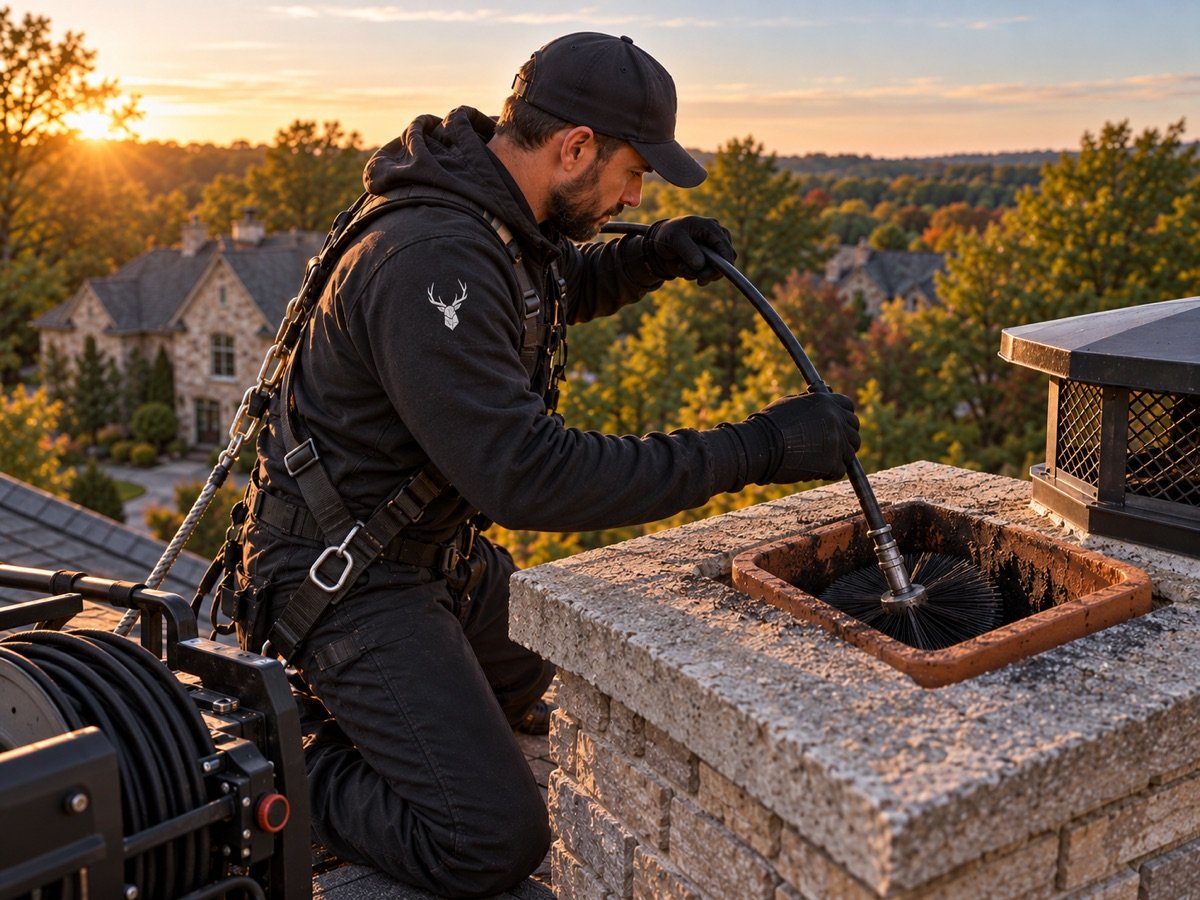
Creosote is not one substance. It forms in stages, and the stage it has reached decides whether a sweep will shift it…
Quick answer
Chevy Chase is one of the places we cover in Montgomery County, and chimney work is where most enquiries here start — Count the pots on the stack and count the appliances in the house. If the two numbers do not match, one of them is doing something nobody has looked at. Chimney, air duct and dryer vent services are all available, for residential and commercial properties. Scope and price are set against the system once it has been seen, so send the property type and what you are noticing to get a real figure.
If your question isn't here, send it with an estimate request and we'll answer it directly.
Chevy Chase is one of the places we publish coverage for, as part of Montgomery County. Coverage for a specific address is confirmed on the estimate request rather than assumed from the town name — you get a real yes or no for your address.
A sweep removes deposit. An inspection assesses the structure carrying it. A swept flue is the only state in which a liner can properly be seen, which is why the two so often belong in the same visit.
A capped or blocked-off flue left in place still admits moisture and still holds whatever was in it, and the room below is no longer being ventilated by it. Closed-off fireplaces are a common source of exactly this complaint.
Soot, creosote and loose debris, taken off the flue liner, the smoke chamber and the firebox and collected rather than pushed further into the run.
There is no town price. The figure follows the system in front of us — its length, layout, access and condition — so it is set against your property rather than your postcode. The estimate is free and commits you to nothing.
Send the property type and the service you're after. You'll get a clear scope and a price — no obligation to book.