
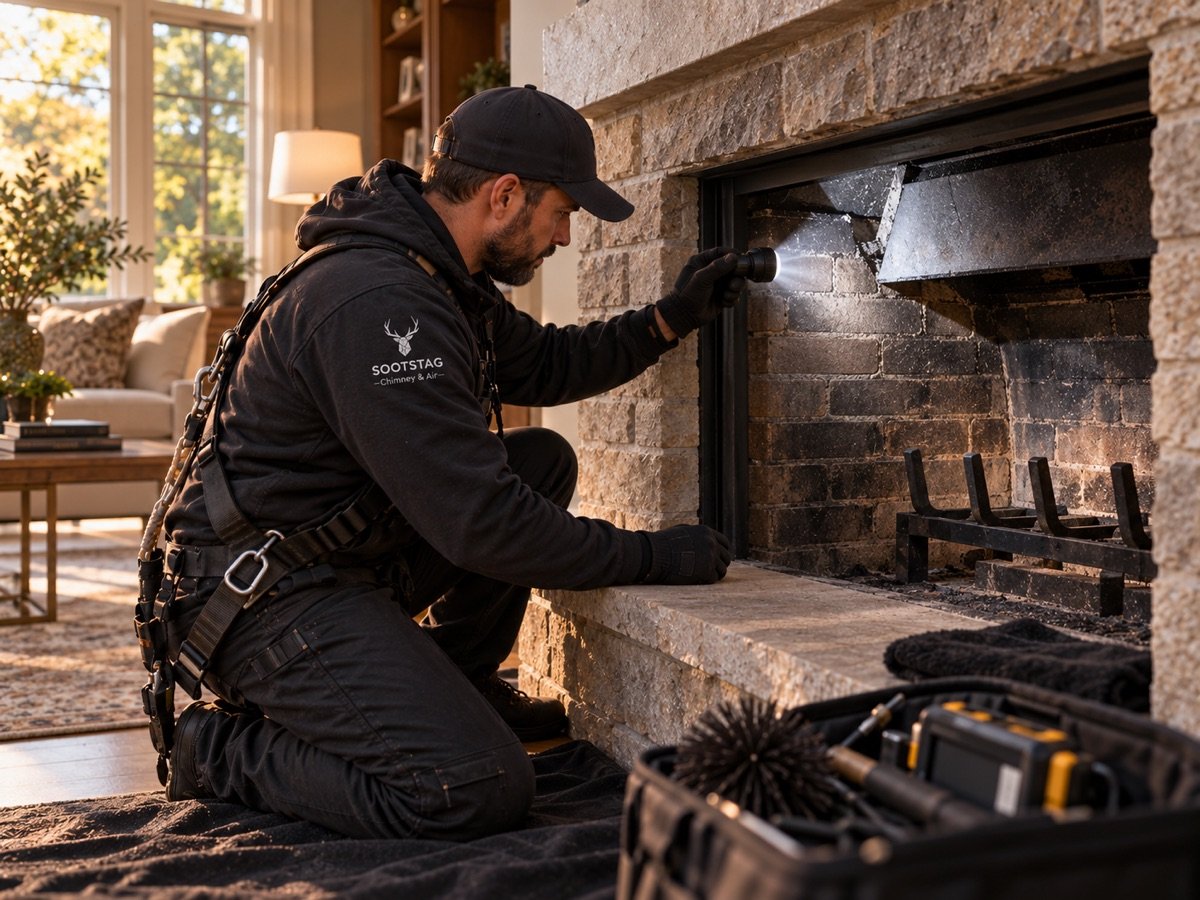
Why Your Fireplace Smells When It Is Not Lit
Fireplace odour has two ingredients: something in the flue, and air coming down rather than going up. Both are addressable, and masking…

Near the water around Middle River, damp is the recurring theme rather than deposit alone. Moisture reacts with what is on a flue wall, which is what produces the smell people notice in warm weather, and it works on masonry and terminations at the same time.
Sweeping, inspection and creosote removal for fireplaces and flues.
Cleaning and inspection across supply, return and connected equipment.
All air duct servicesCleaning, inspection and obstruction removal along the vent line.
All dryer vent servicesMiddle River has older housing and a lot of waterfront exposure. Damp and corrosion in flues and terminations show up here more than in inland areas.
What that tends to mean
Damp and corrosion show up in flues and terminations where exposure is greater. A termination that has corroded stops closing properly, and a termination that does not close is how things get in as well as how water does.
Where the smell is the complaint, dealing with chimney odour starts with the source rather than the symptom.
What you can check yourself
Look at the cap and the flashing from the ground. Rust, gaps or a cap that has moved are all visible without going up.
Why a cold chimney smells in warm weather is a question of air direction as much as deposit.
That is a description of the building stock, not a finding about your property. The scope for any address is set after the system has been seen.
Start from what you are noticing rather than from a service name. Each of these points somewhere different.
Fireplace odour has two ingredients: something in the flue, and air coming down rather than going up. Both are addressable, and masking…
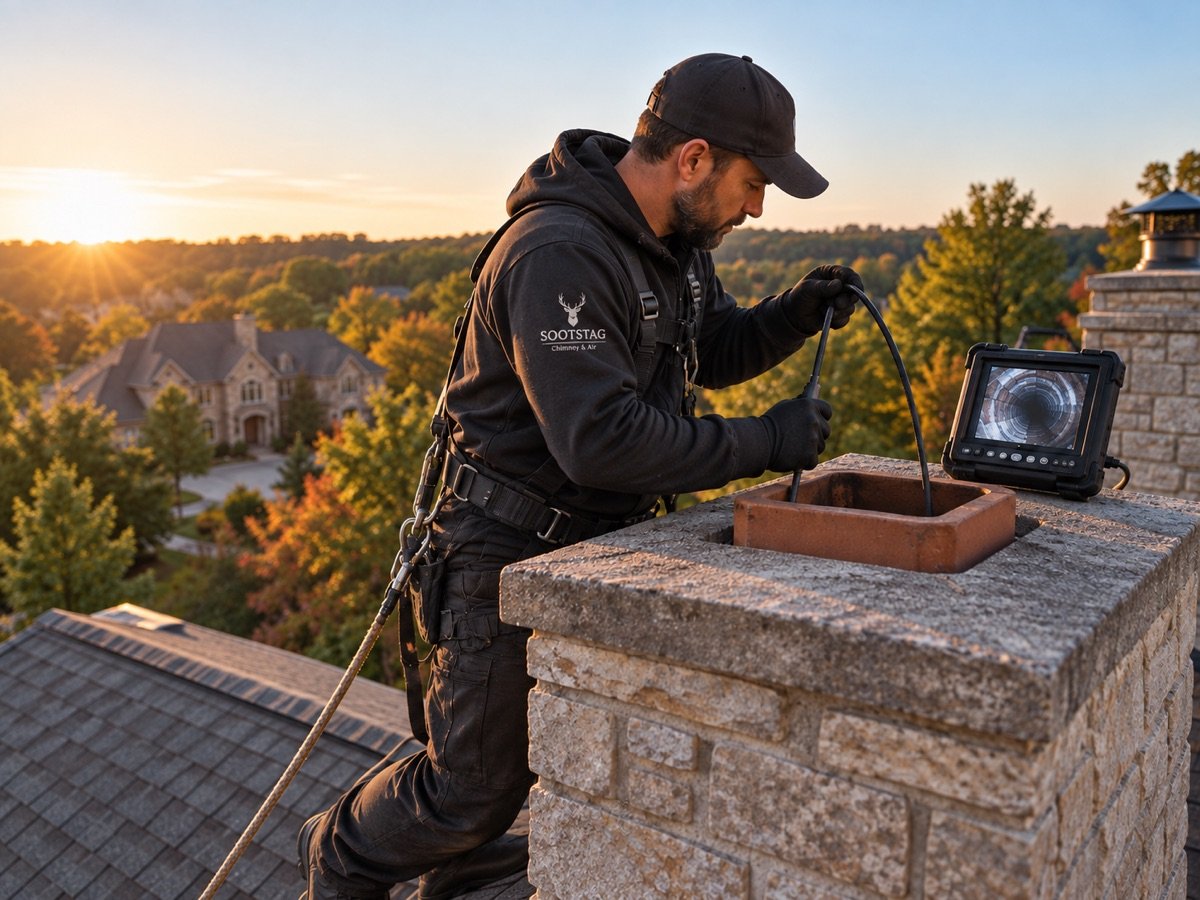
NFPA 211 defines three inspection levels. The difference between them is how much of the chimney is examined and how much has…
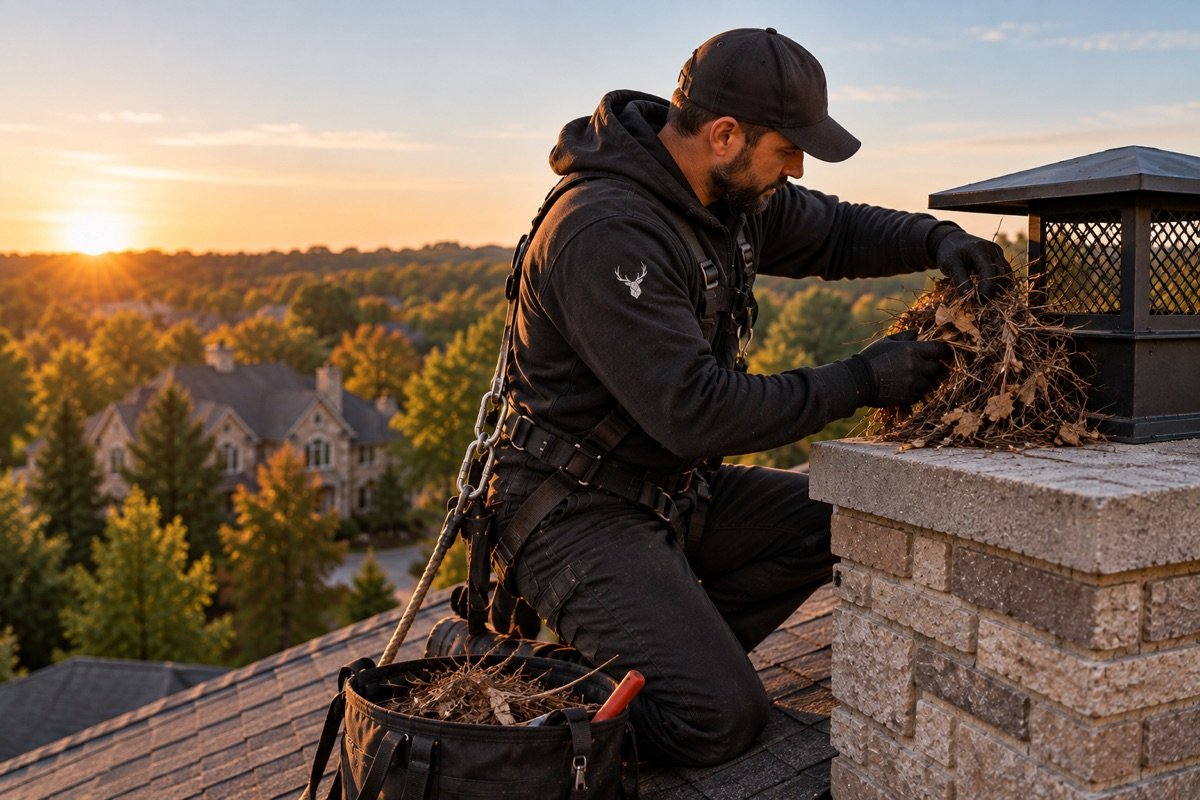
Nesting material is a solid obstruction, not an accumulation. Removing it is its own job — and with some birds, timing is…
The work starts by locating the source — deposit, water, an obstruction, or the direction the air is moving — because treating a symptom without the source lasts exactly as long as the product does.
Get a free estimateQuick answer
Middle River is one of the places we cover in Baltimore County, and chimney work is where most enquiries here start — Look at the cap and the flashing from the ground. Rust, gaps or a cap that has moved are all visible without going up. Chimney, air duct and dryer vent services are all available, for residential and commercial properties. Scope and price are set against the system once it has been seen, so send the property type and what you are noticing to get a real figure.
If your question isn't here, send it with an estimate request and we'll answer it directly.
Middle River is one of the places we publish coverage for, as part of Baltimore County. Coverage for a specific address is confirmed on the estimate request rather than assumed from the town name — you get a real yes or no for your address.
By the smell. Sharp and burnt is deposit reacting with humidity; musty is water getting in. They are different causes and they are fixed differently.
It works on masonry, mortar and terminations over time. Where water is getting in, finding the entry point matters more than cleaning what it has left behind.
It produces very little solid deposit, but the flue still needs checking. Blockages, moisture damage and failed liner joints are not fuel-specific.
There is no town price. The figure follows the system in front of us — its length, layout, access and condition — so it is set against your property rather than your postcode. The estimate is free and commits you to nothing.
Send the property type and the service you're after. You'll get a clear scope and a price — no obligation to book.