
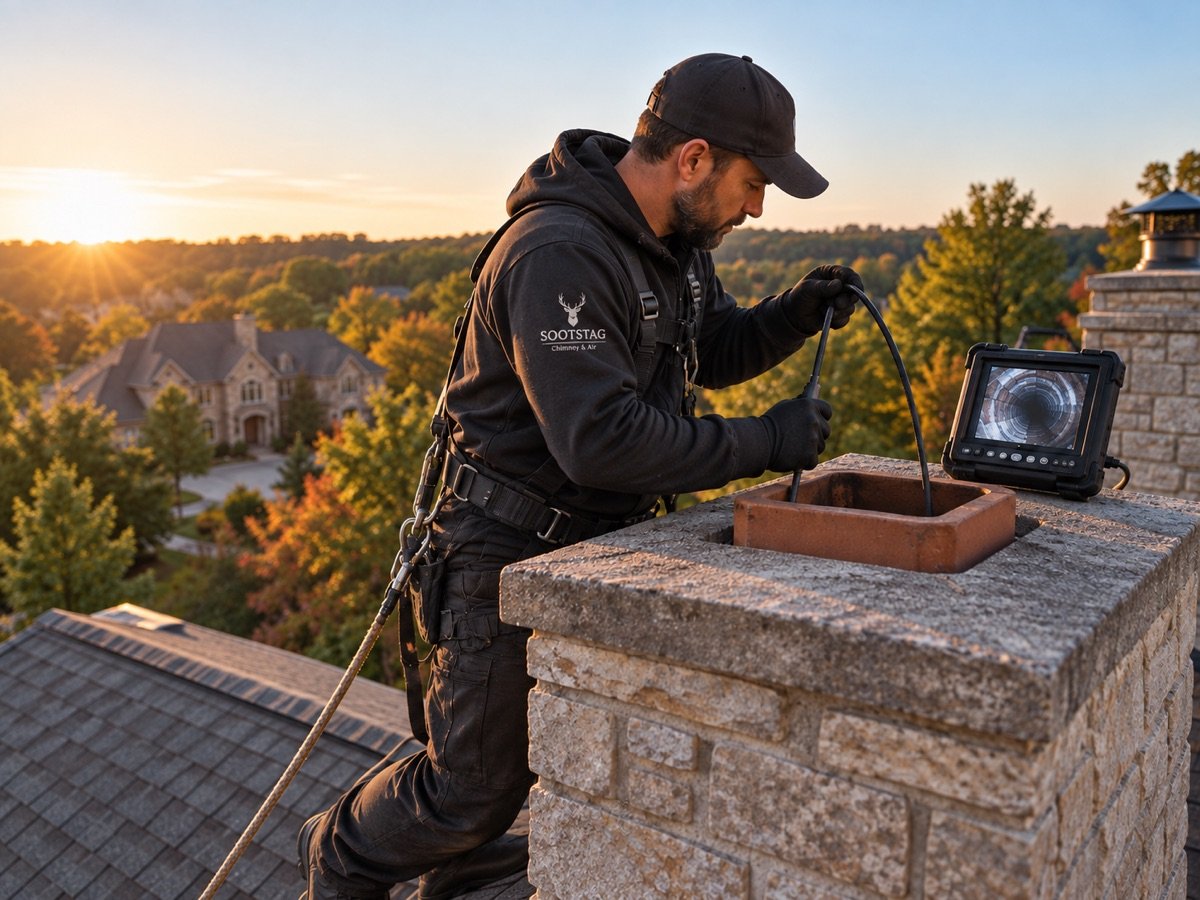
Chimney Inspection Levels: What 1, 2 and 3 Actually Cover
NFPA 211 defines three inspection levels. The difference between them is how much of the chimney is examined and how much has…

On the compact properties in Dundalk the constraint is usually not the chimney but reaching it. Whether a flue is worked from the firebox, from the roof, or from both changes the equipment, the time and the price, and it is settled before anyone arrives rather than discovered on the day.
How the chimney will be reached is agreed when the visit is arranged, so the job that happens is the job that was quoted. Where access turns out to be the restriction, that is what the report says.
Get a free estimateDundalk has a dense stock of older row and semi-detached housing. Shared walls and shared stacks mean the flue serving one property is often not the only one in it.
What that tends to mean
In row and semi-detached housing a single stack frequently carries more than one property's flue. Establishing which flue is yours comes before deciding what to do with it, and it is rarely obvious from inside either house.
How the flue is reached is part of what the work itself is quoted against here.
What you can check yourself
Count the pots on the shared stack and compare with the number of properties under it. That arithmetic is usually the first useful fact.
That is a description of the building stock, not a finding about your property. The scope for any address is set after the system has been seen.
Sweeping, inspection and creosote removal for fireplaces and flues.
Cleaning and inspection across supply, return and connected equipment.
All air duct servicesCleaning, inspection and obstruction removal along the vent line.
All dryer vent servicesStart from what you are noticing rather than from a service name. Each of these points somewhere different.
NFPA 211 defines three inspection levels. The difference between them is how much of the chimney is examined and how much has…
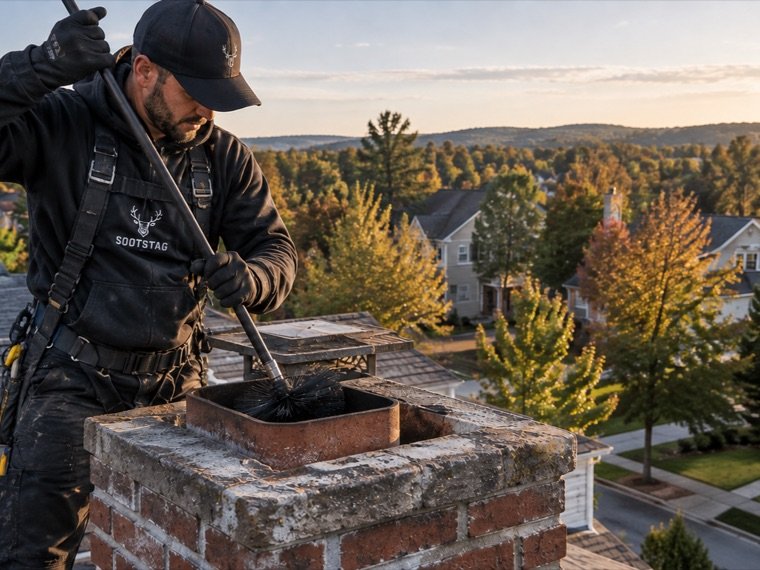
Sweeping frequency depends on what you burn and how you burn it, not on a fixed schedule. Here is what actually drives…
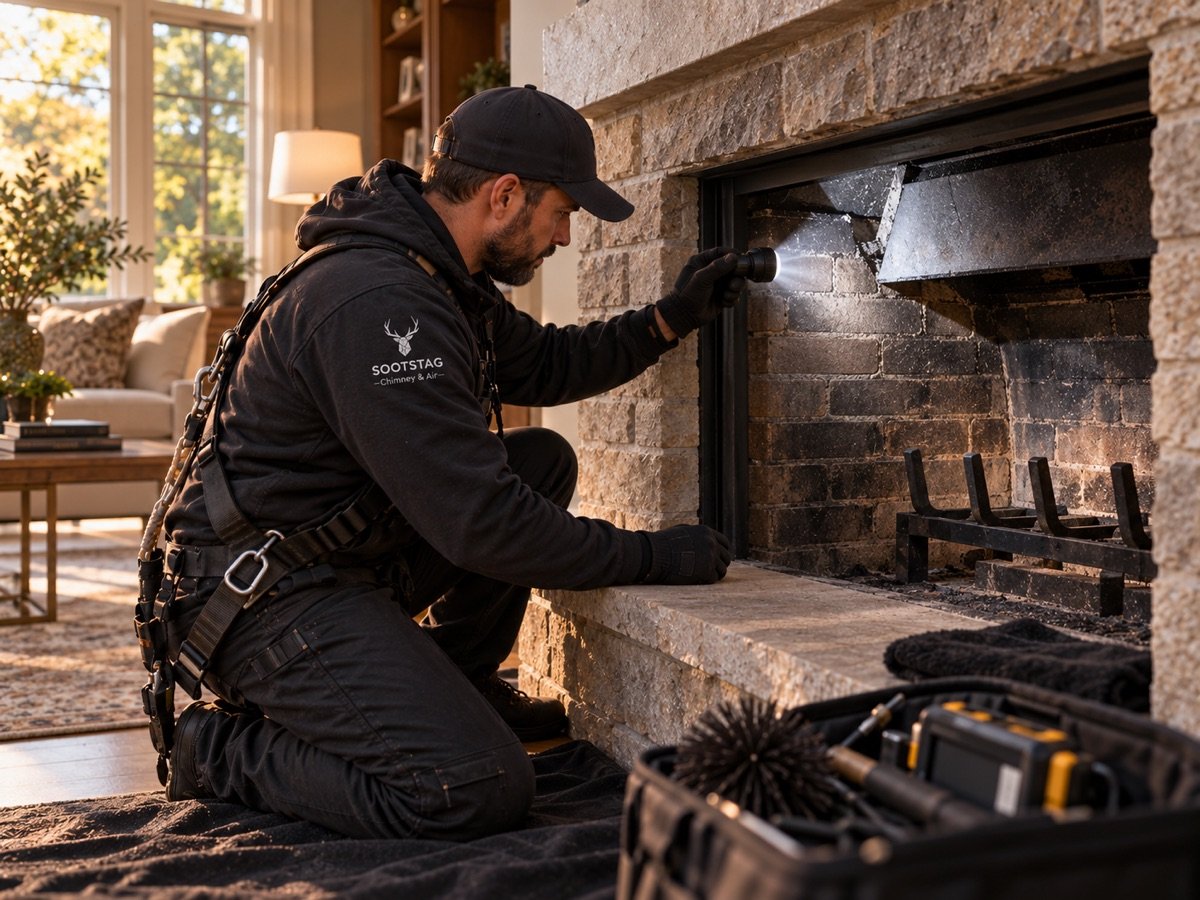
Fireplace odour has two ingredients: something in the flue, and air coming down rather than going up. Both are addressable, and masking…
Quick answer
Dundalk is one of the places we cover in Baltimore County, and chimney work is where most enquiries here start — Count the pots on the shared stack and compare with the number of properties under it. That arithmetic is usually the first useful fact. Chimney, air duct and dryer vent services are all available, for residential and commercial properties. Scope and price are set against the system once it has been seen, so send the property type and what you are noticing to get a real figure.
If your question isn't here, send it with an estimate request and we'll answer it directly.
Dundalk is one of the places we publish coverage for, as part of Baltimore County. Coverage for a specific address is confirmed on the estimate request rather than assumed from the town name — you get a real yes or no for your address.
No. The hearth and surrounding floor are covered and the firebox is sealed to the vacuum before anything is brushed — the point of the containment is that the deposit leaves in the machine.
Whichever the chimney allows. Access from the firebox is the usual route; some runs, terminations and obstructions have to be reached from above. Which applies is settled before the visit, because it changes the job.
Soot, creosote and loose debris, taken off the flue liner, the smoke chamber and the firebox and collected rather than pushed further into the run.
There is no town price. The figure follows the system in front of us — its length, layout, access and condition — so it is set against your property rather than your postcode. The estimate is free and commits you to nothing.
Send the property type and the service you're after. You'll get a clear scope and a price — no obligation to book.